Skip to content

Butcher's Broom

Ruscus Aculeatus

Design with this plant

Overview

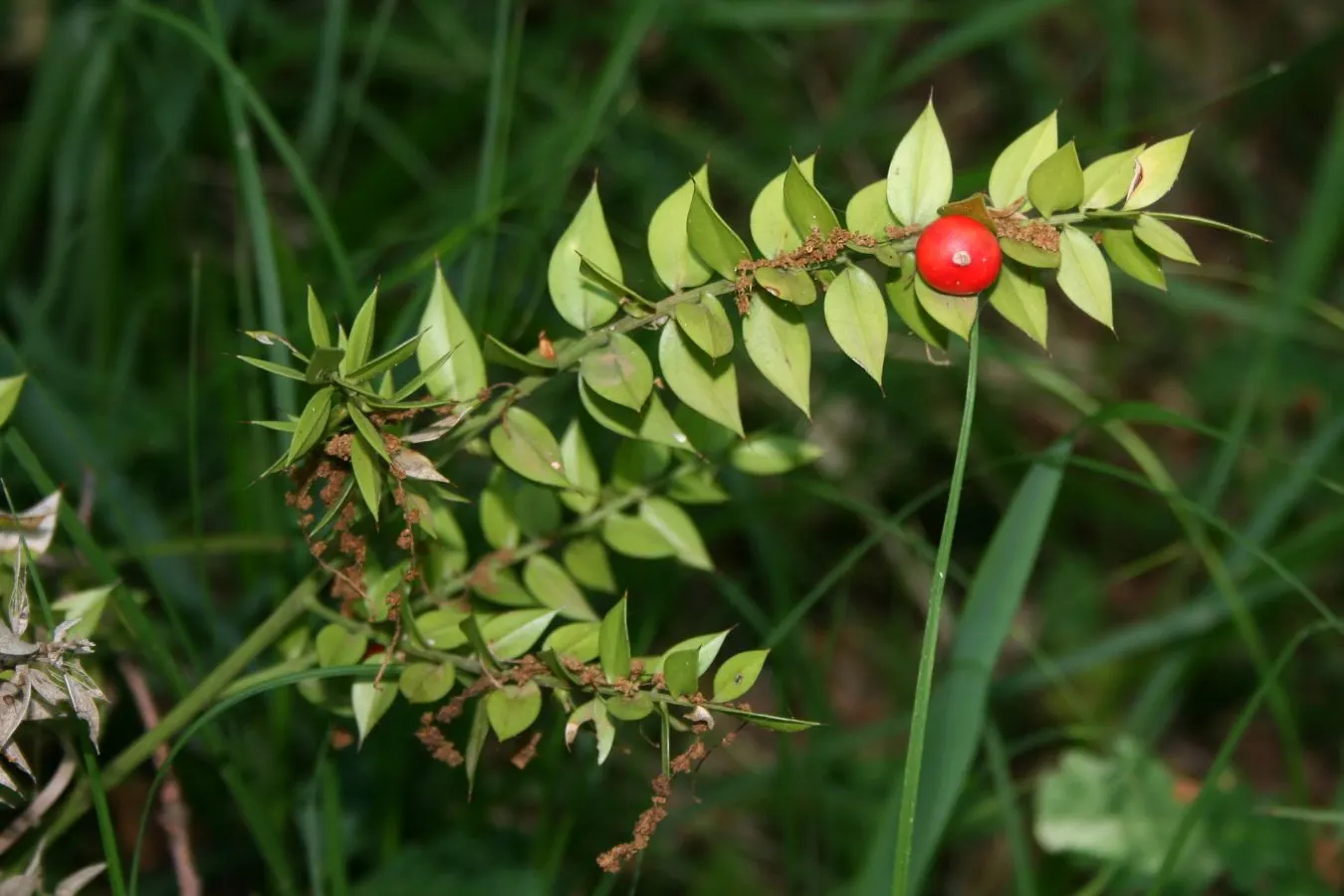
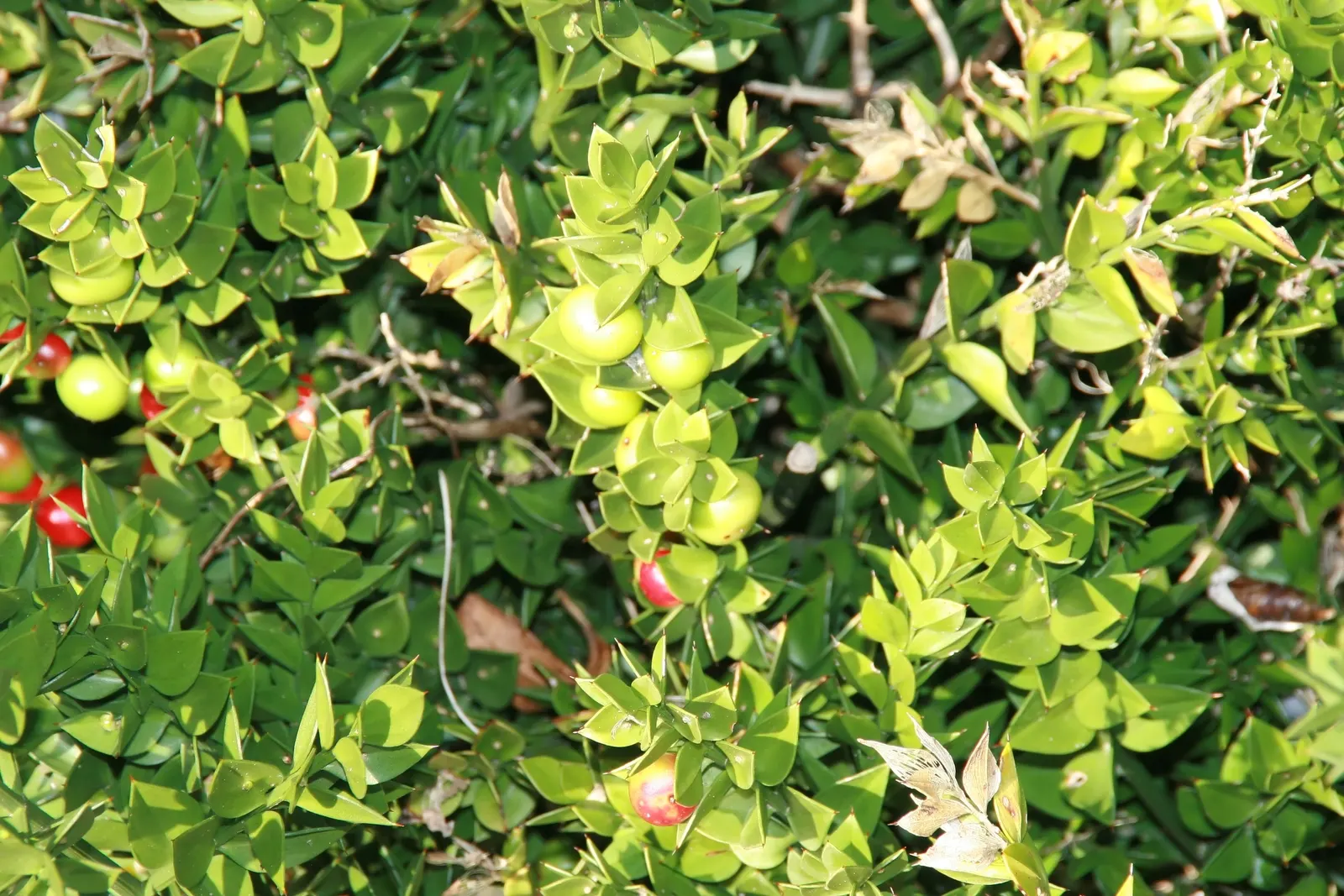
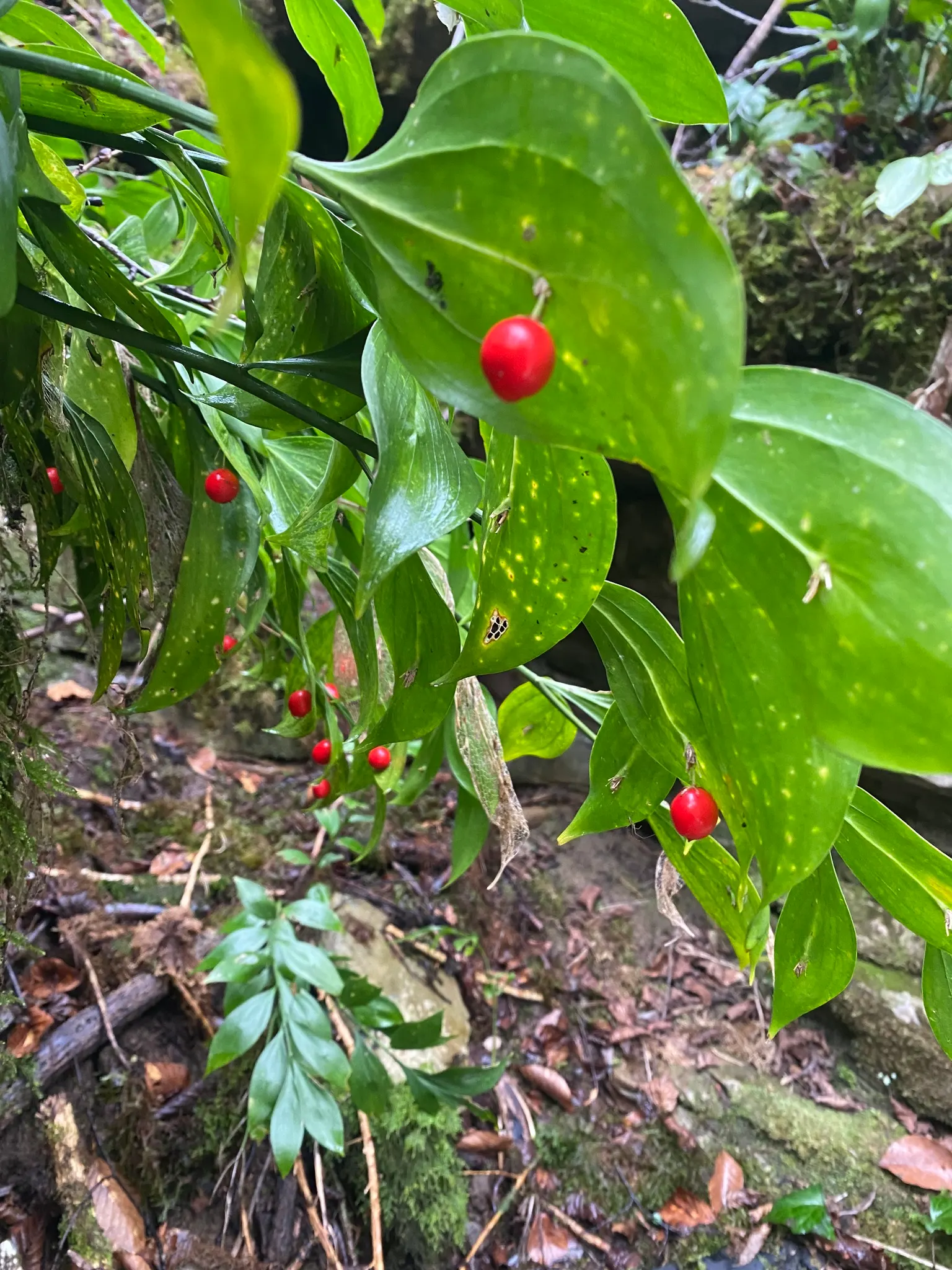
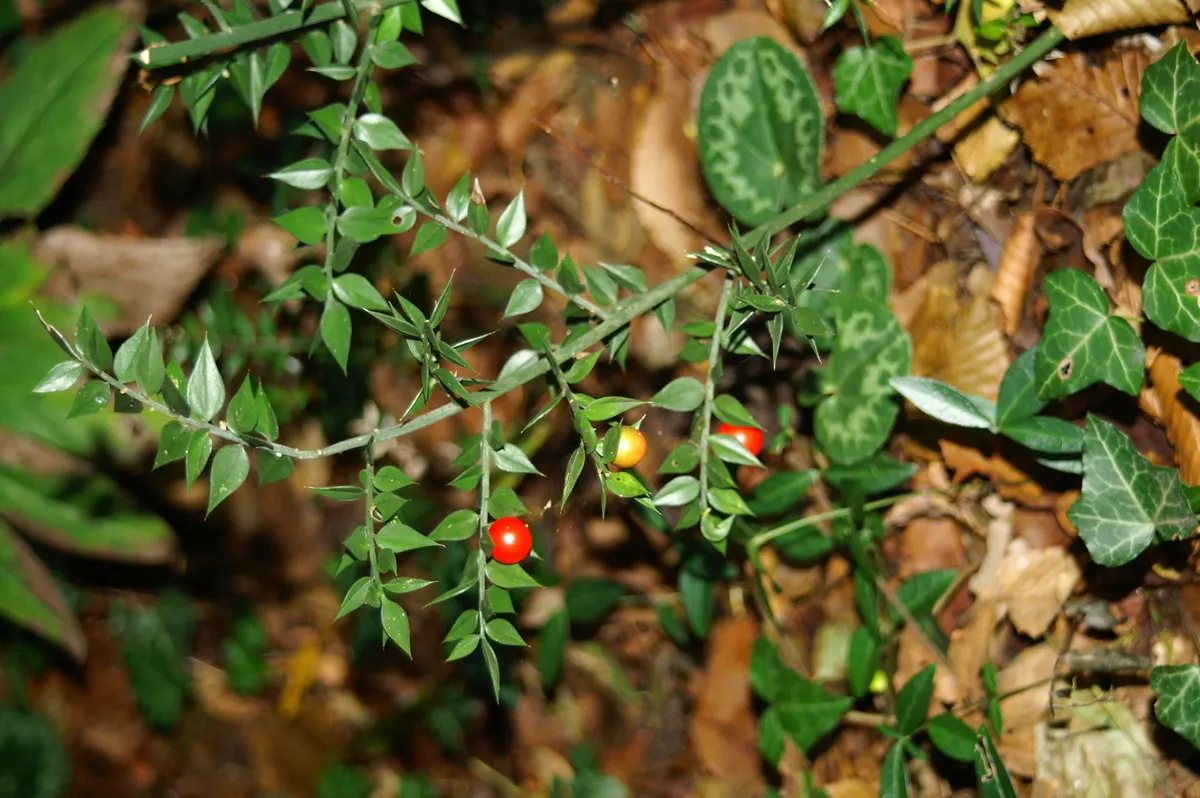
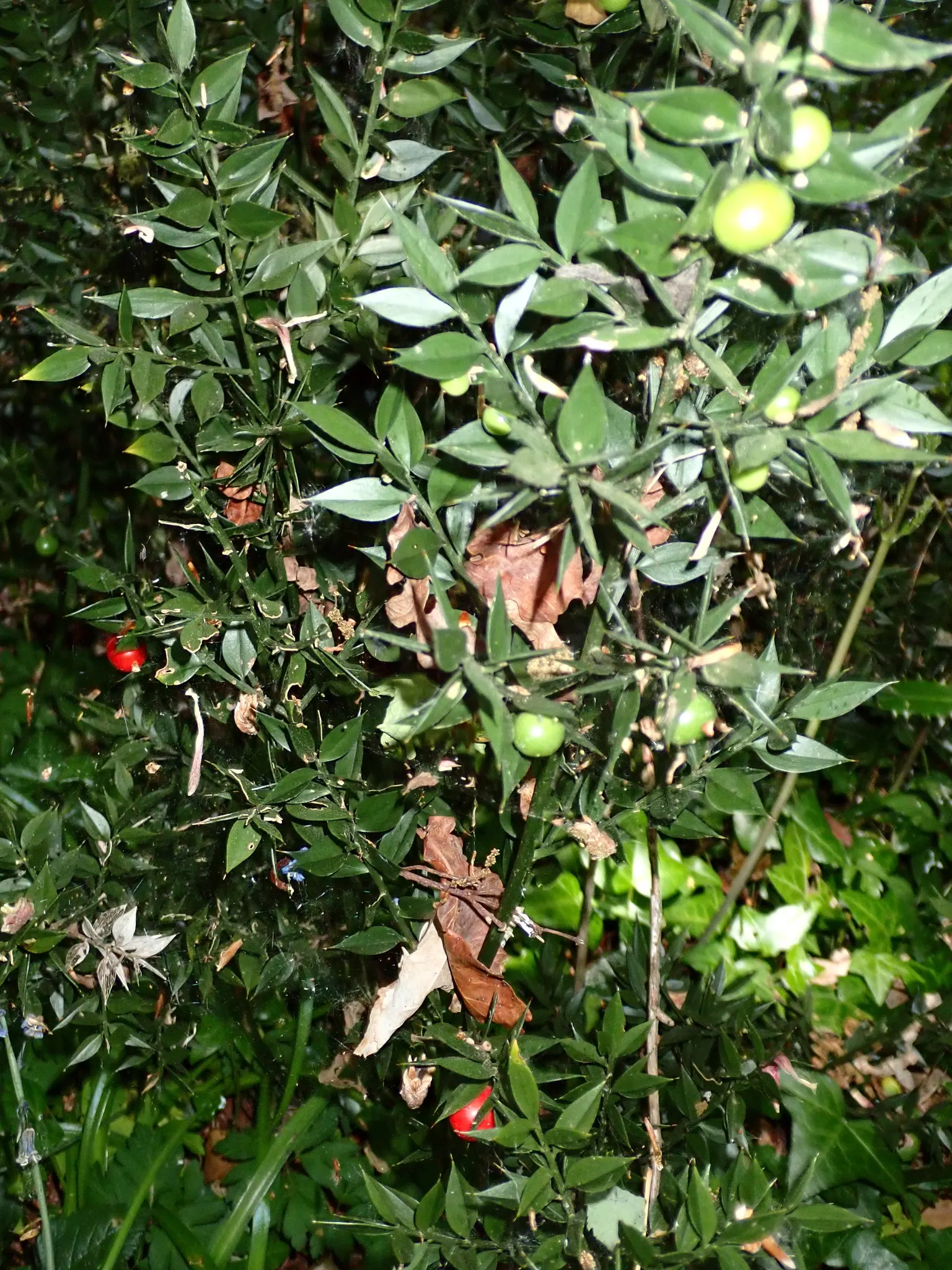
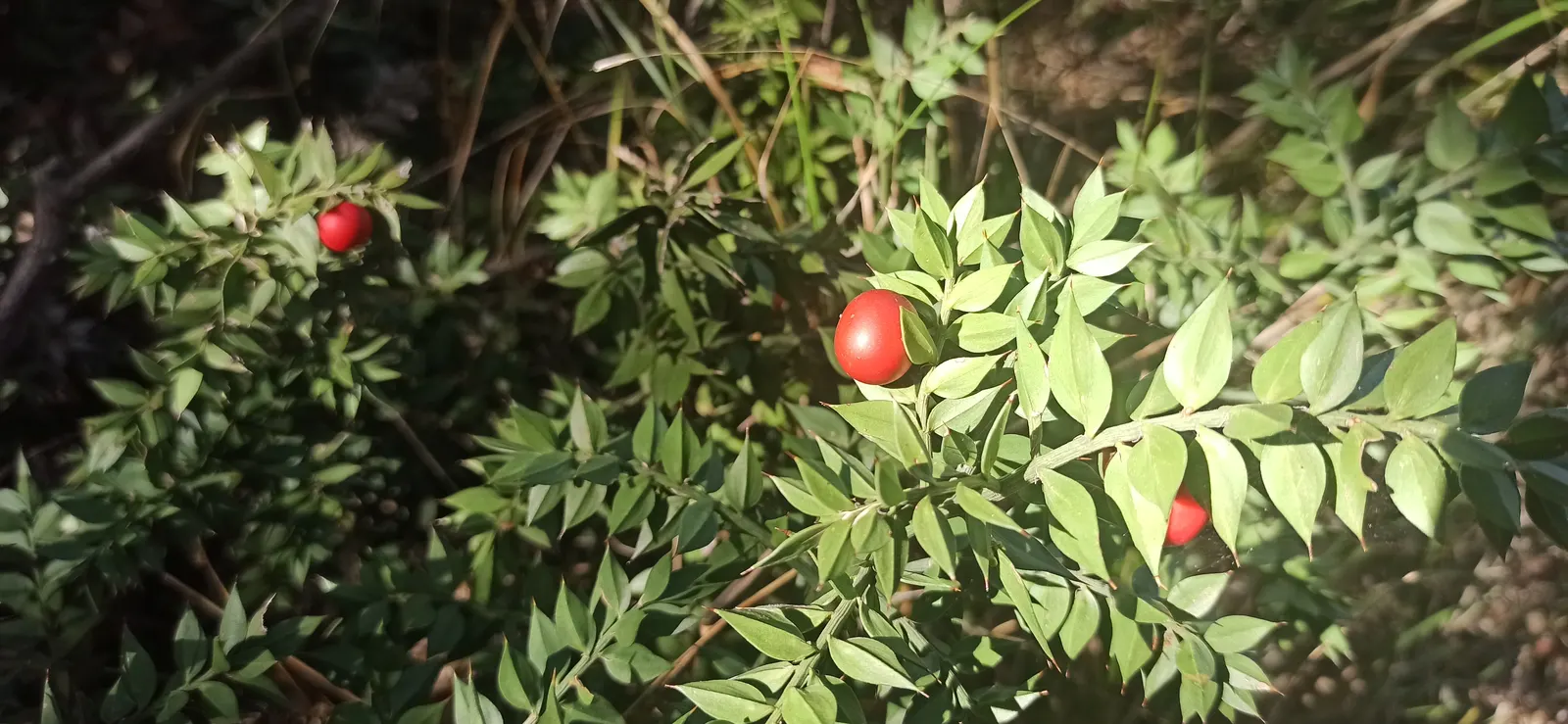
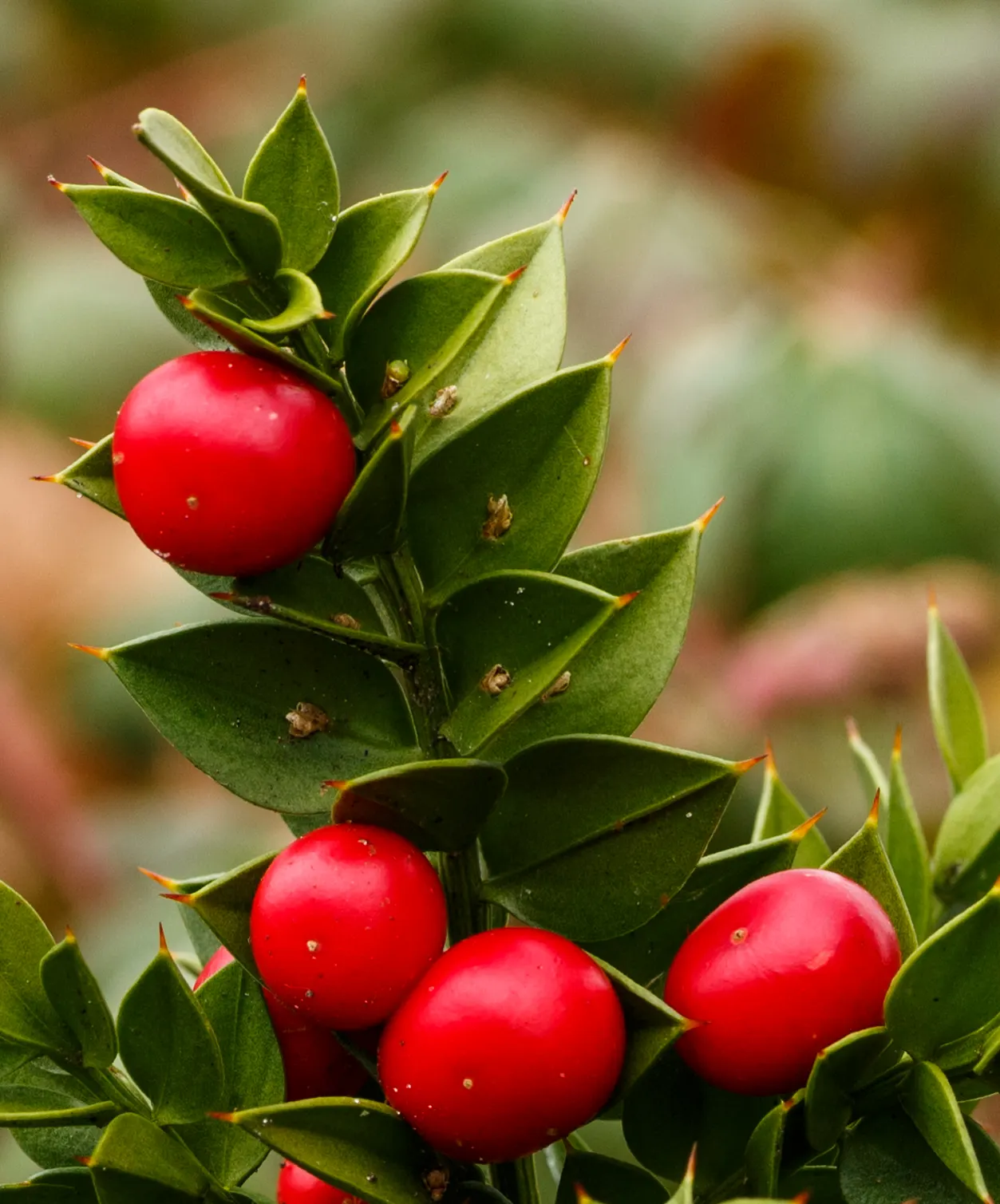
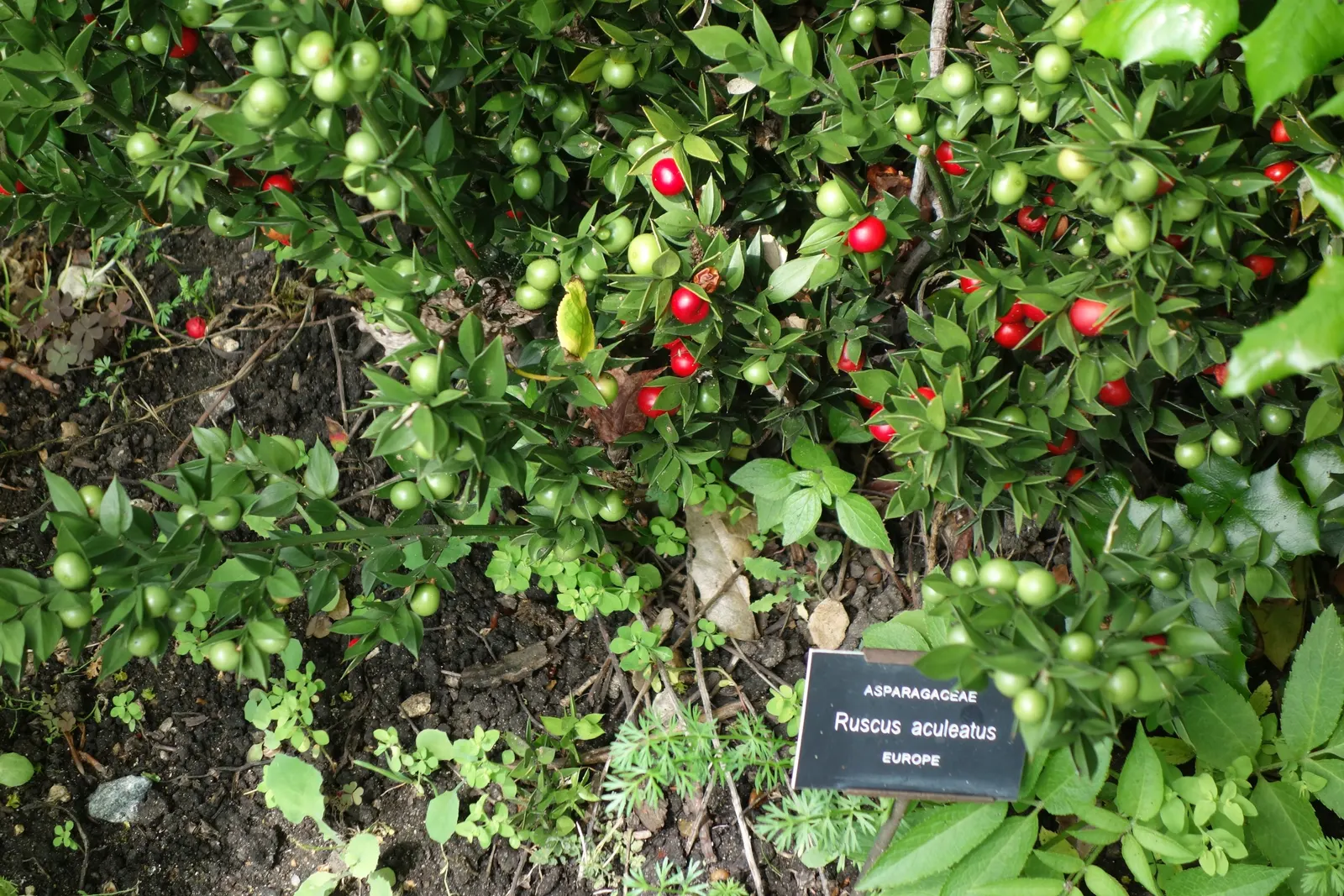
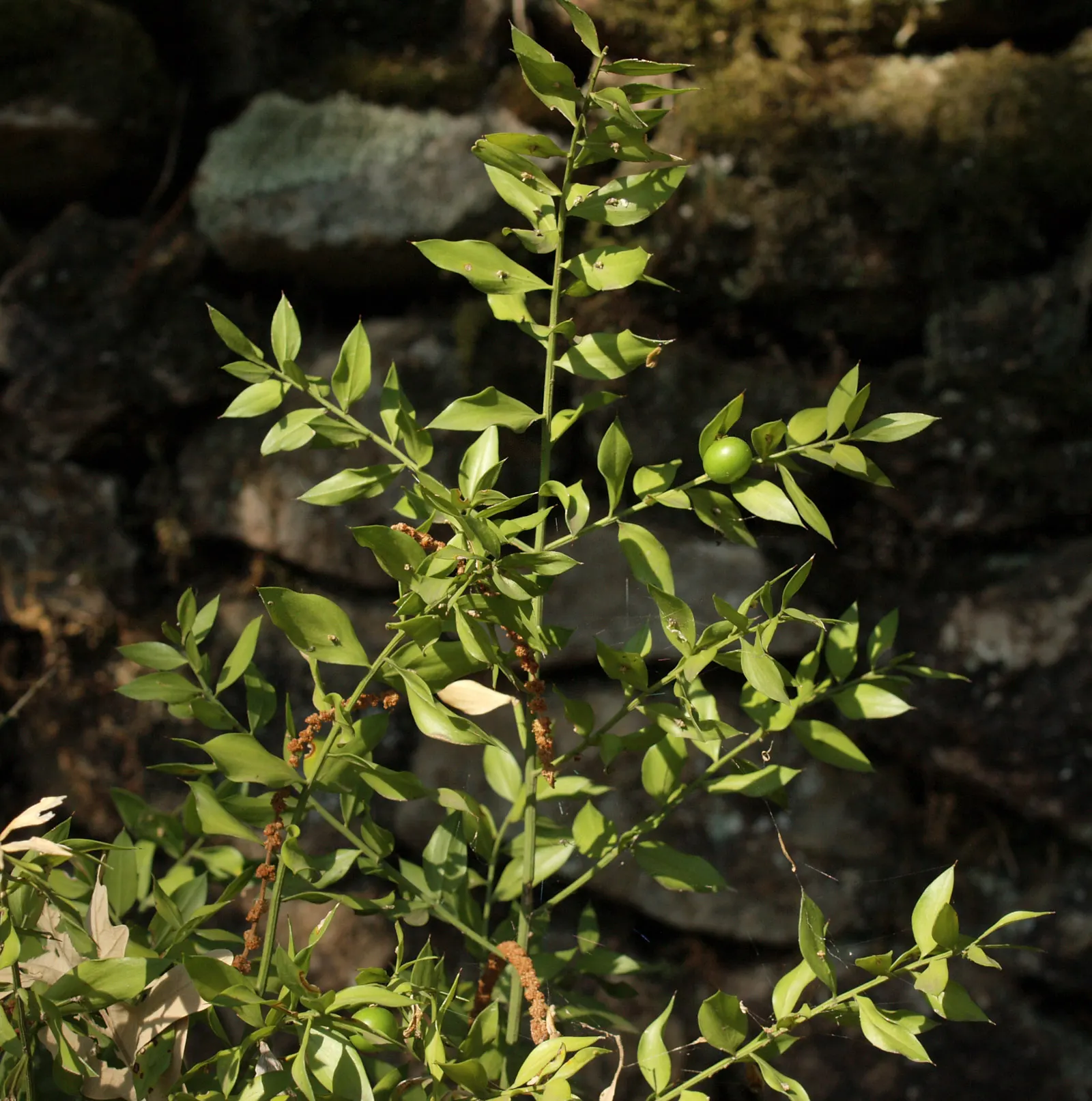
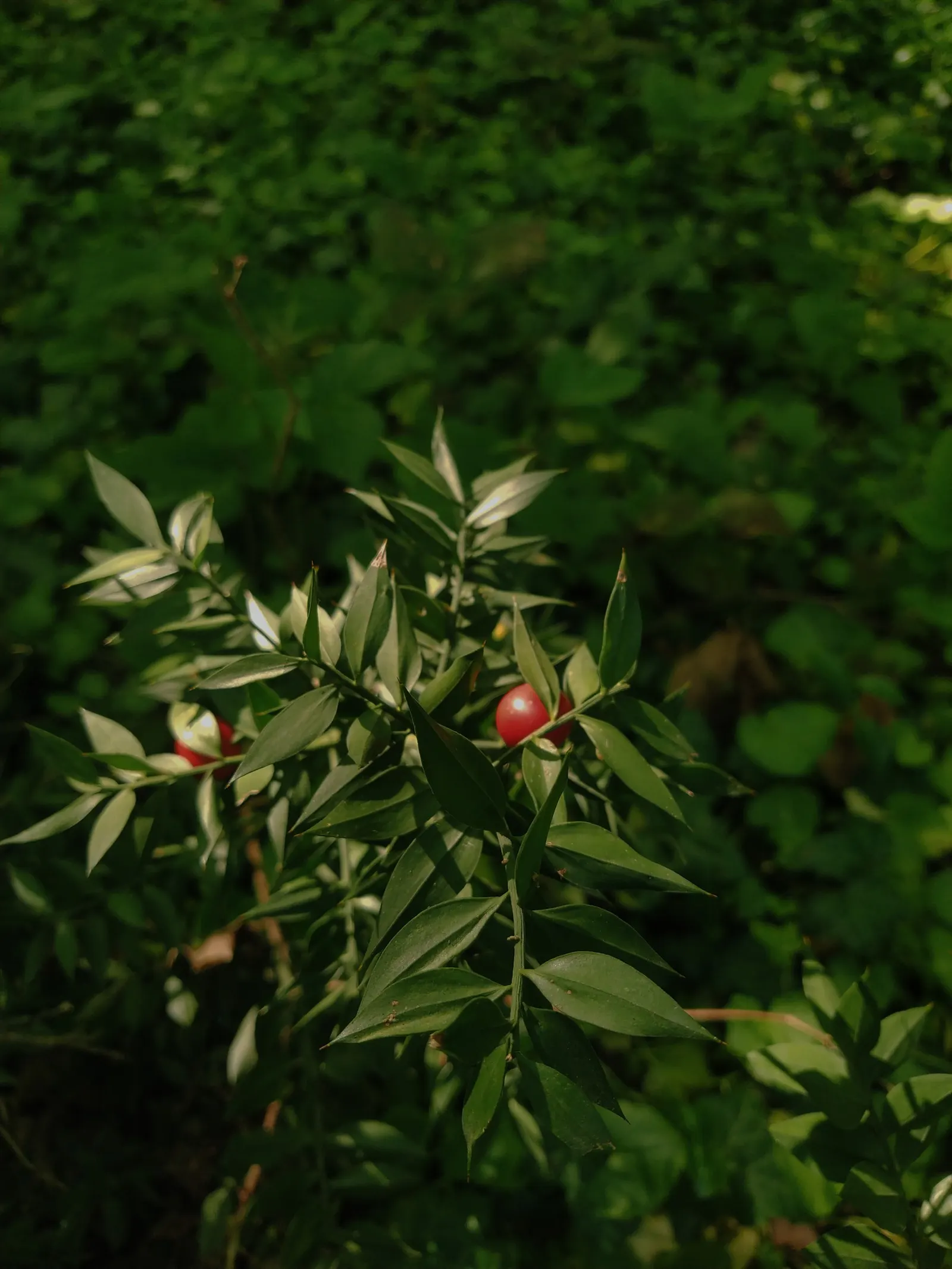
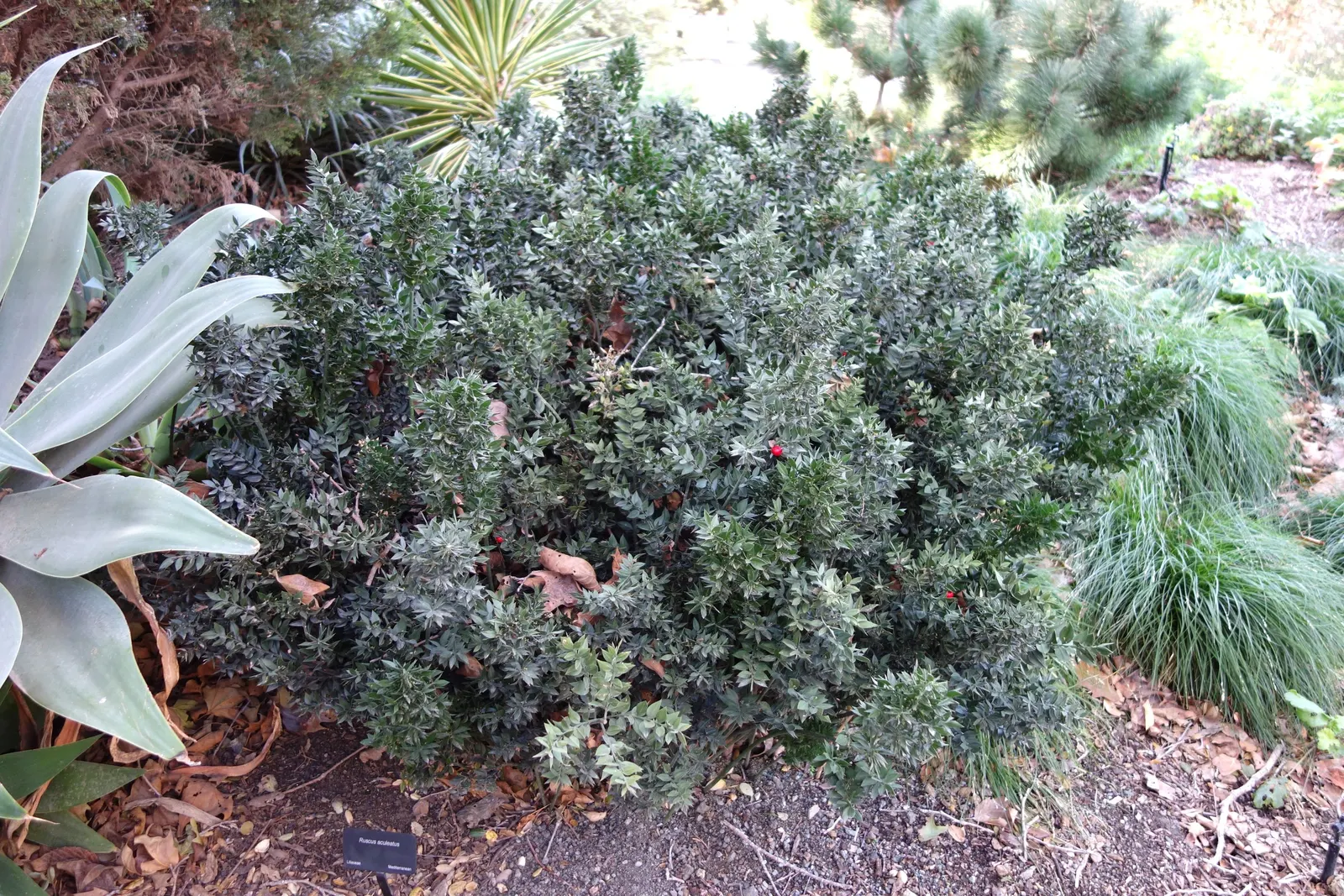
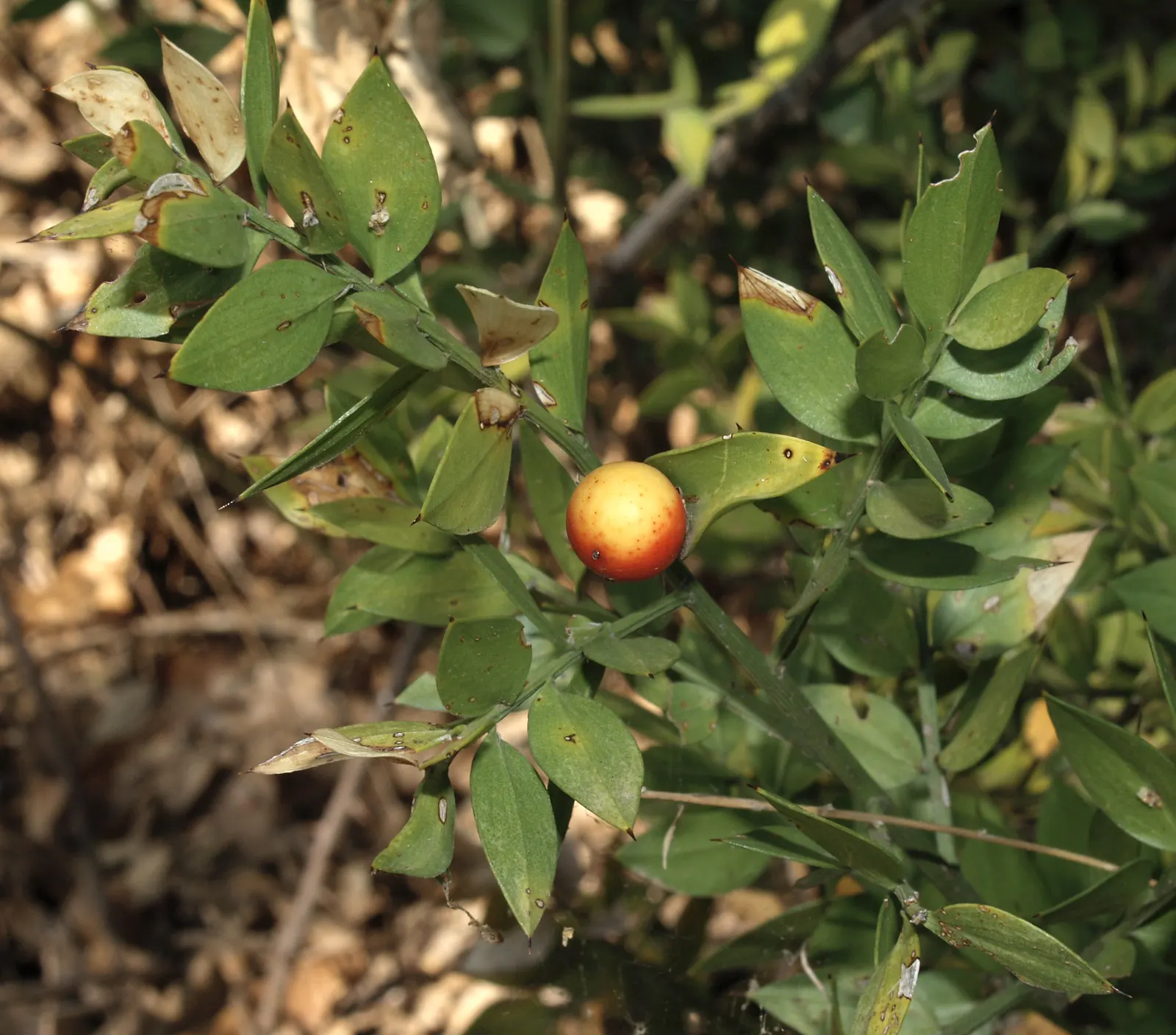
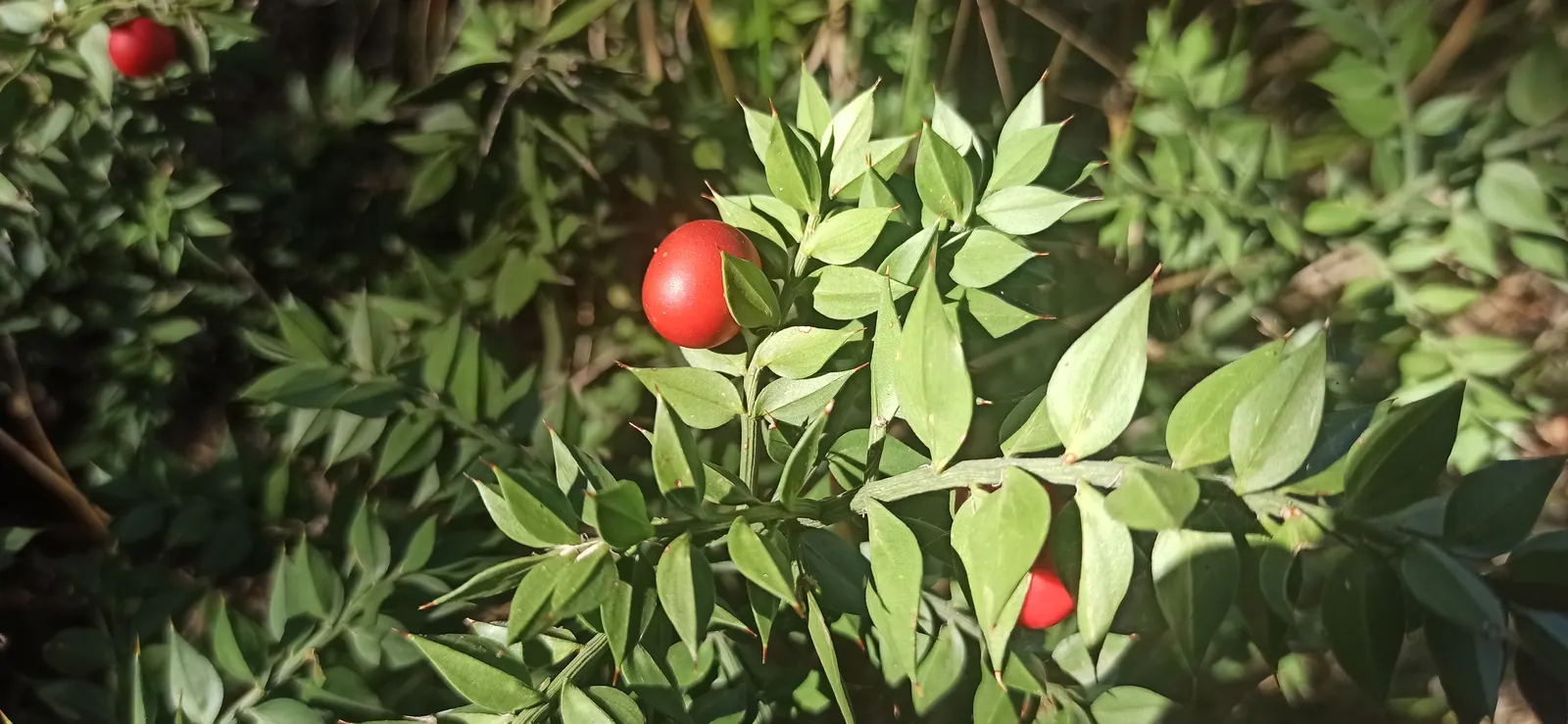
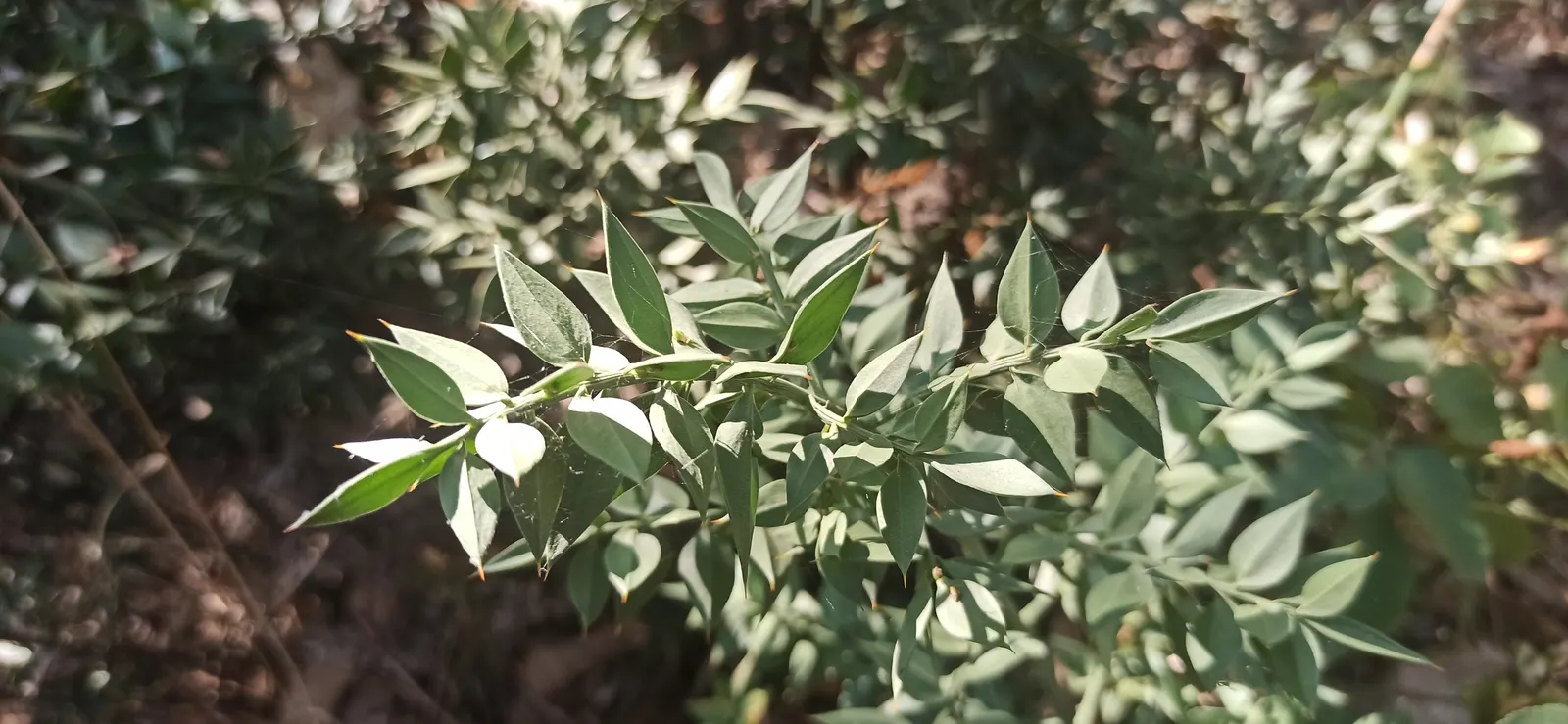
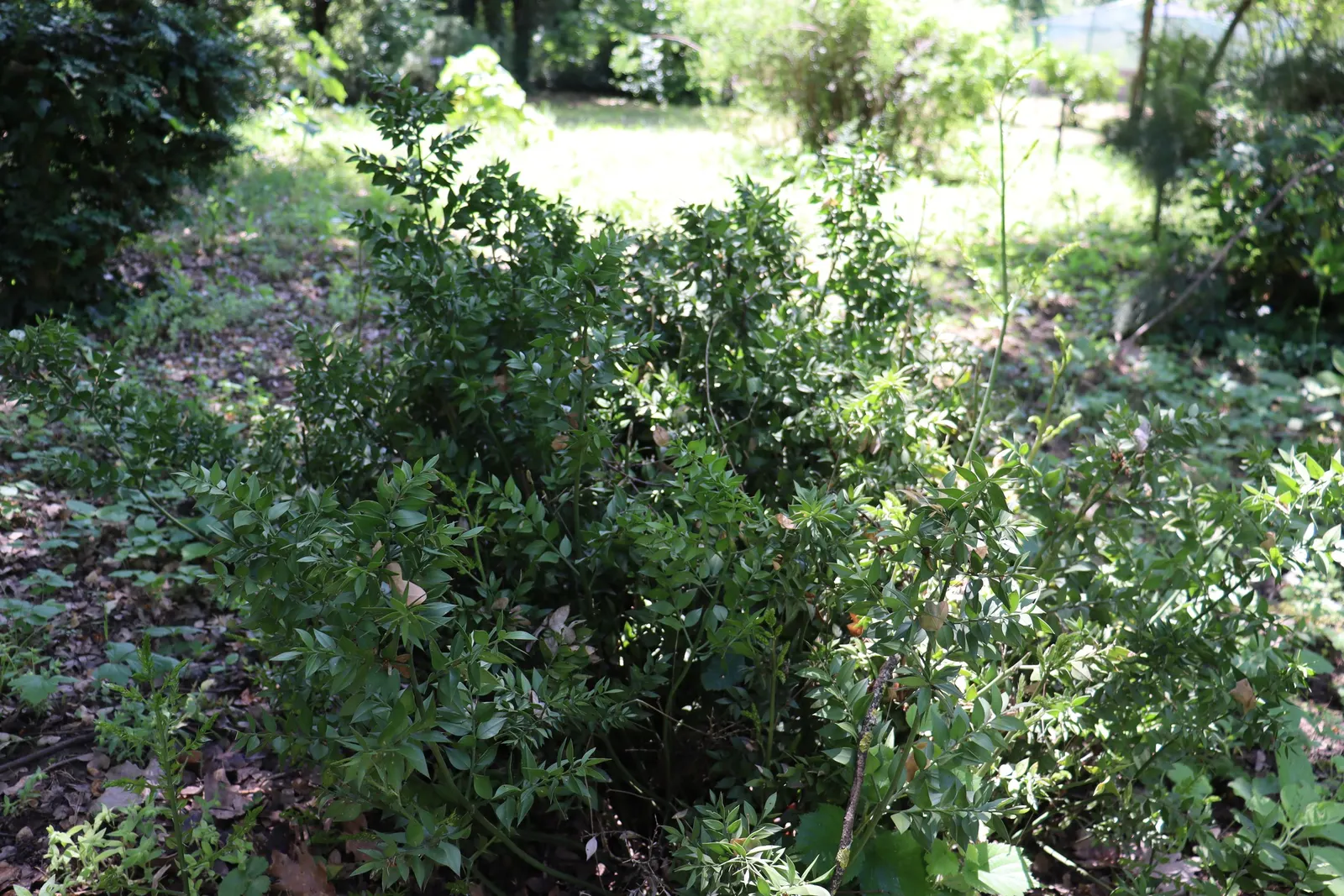
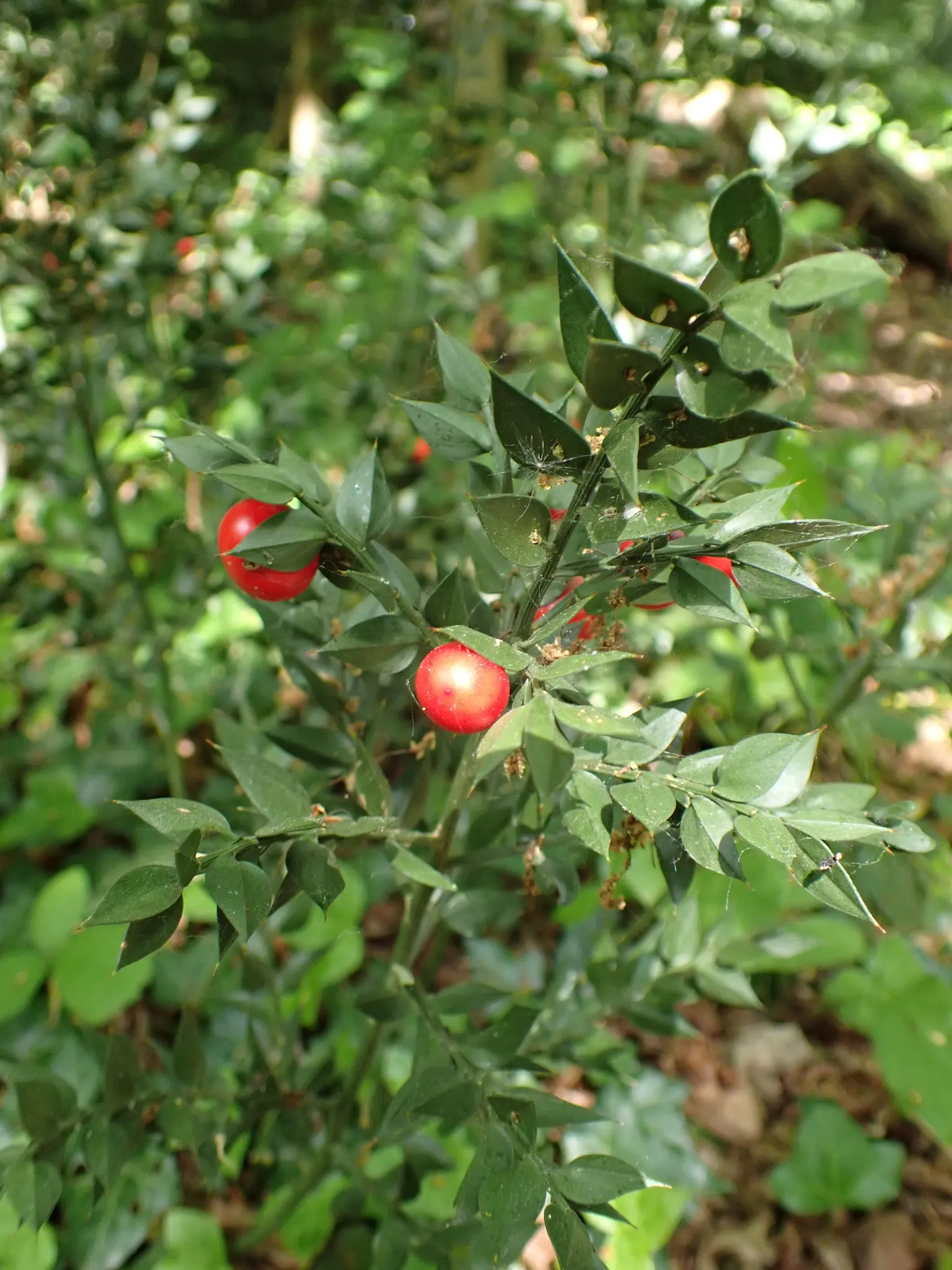
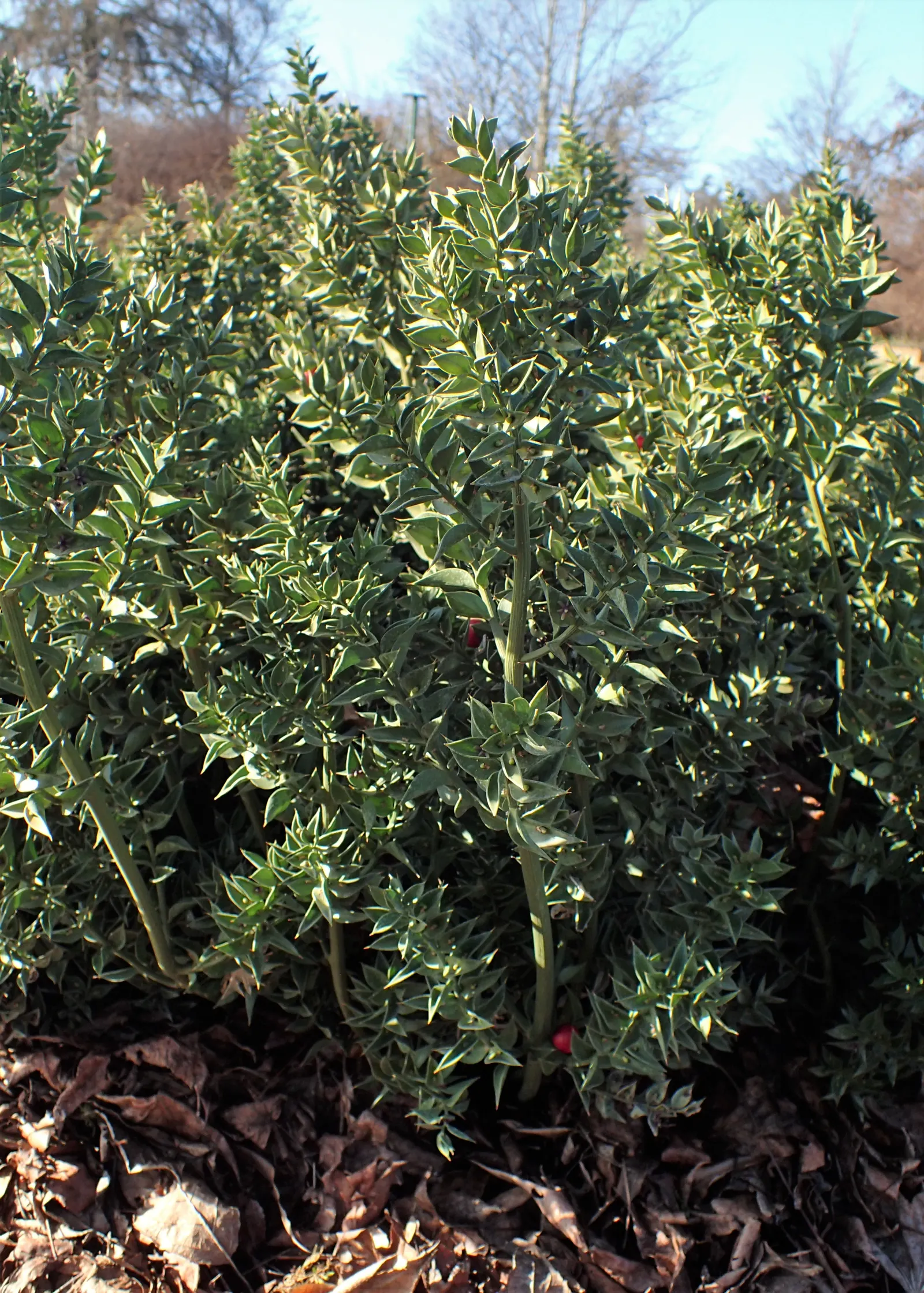
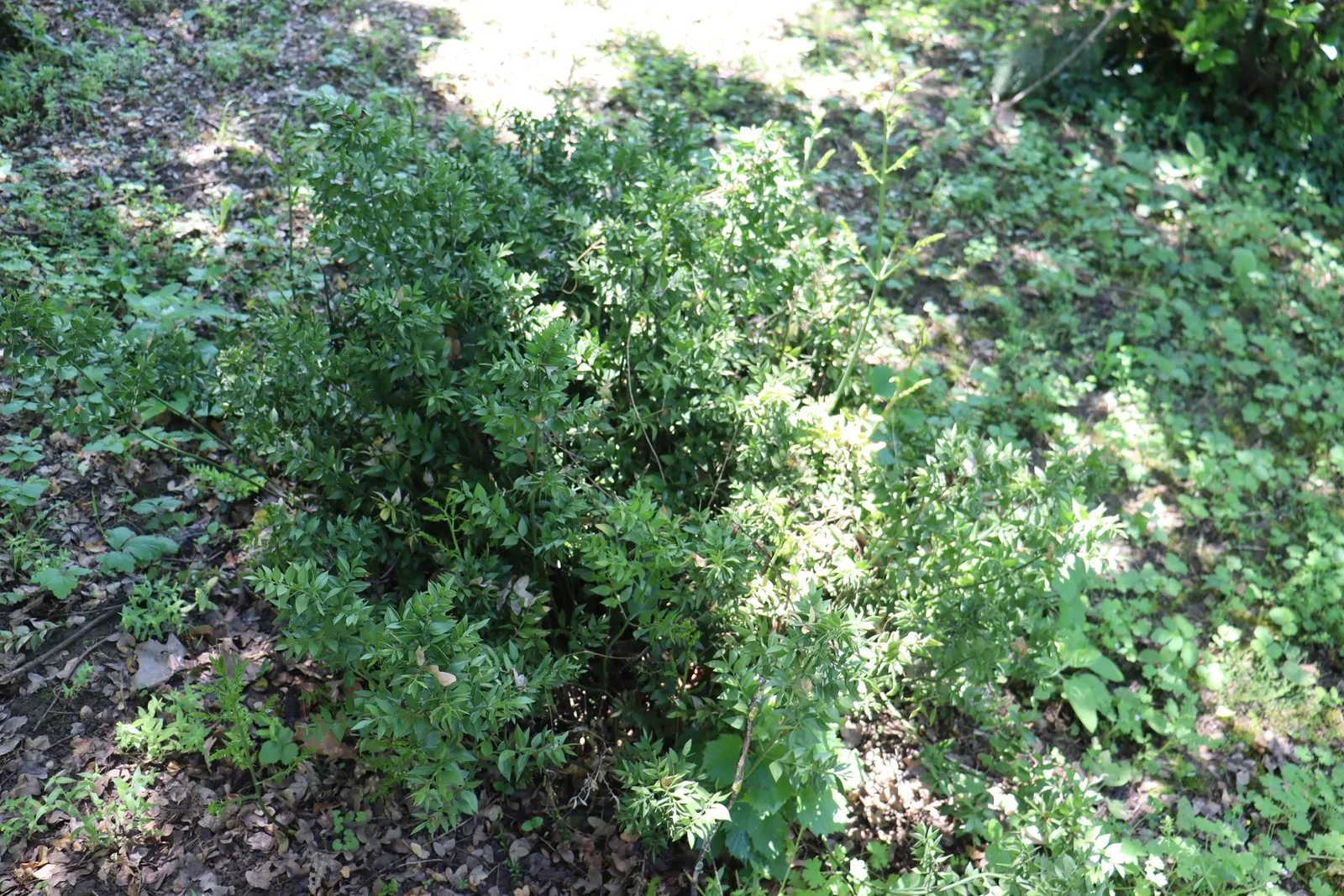
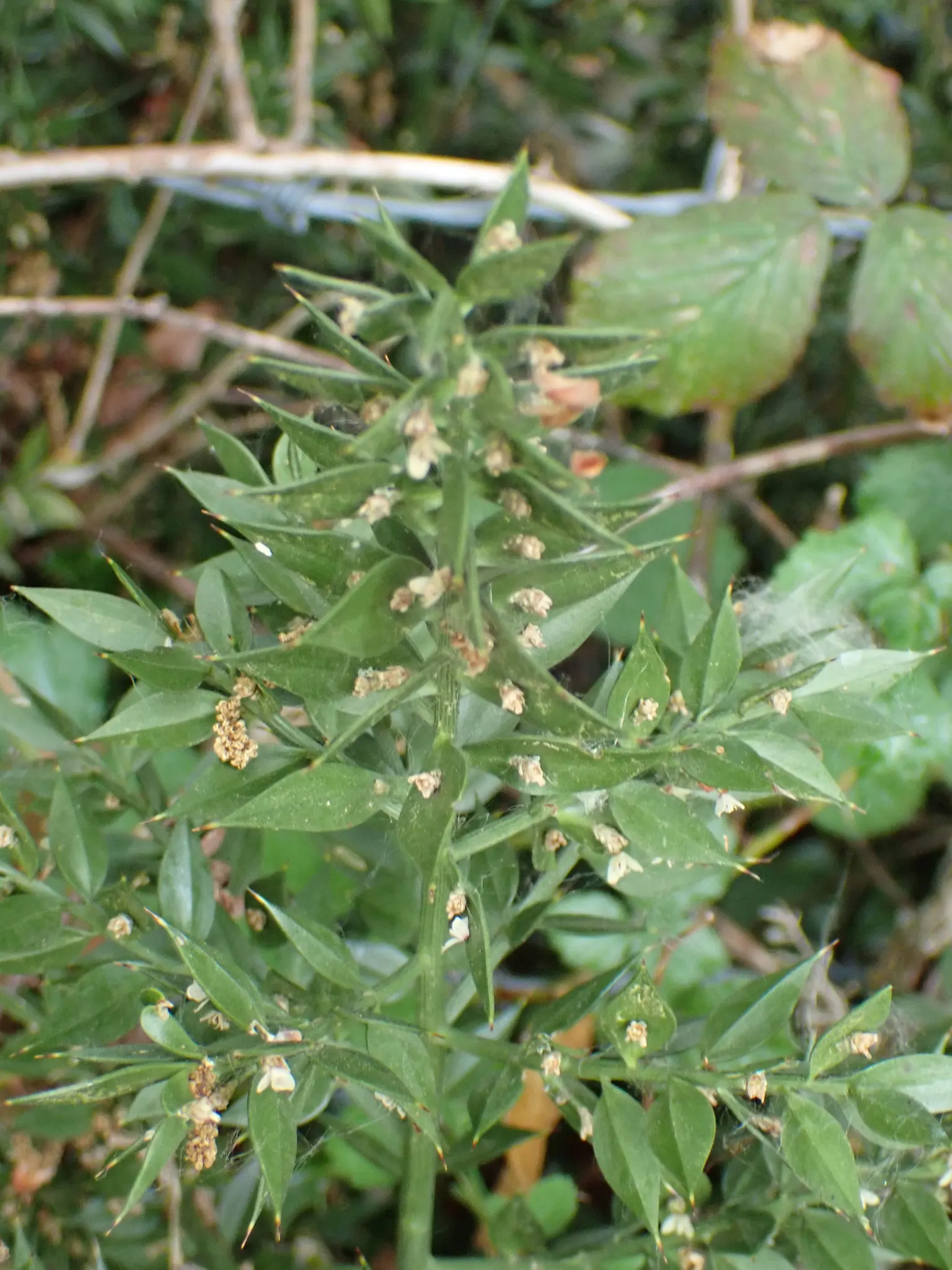
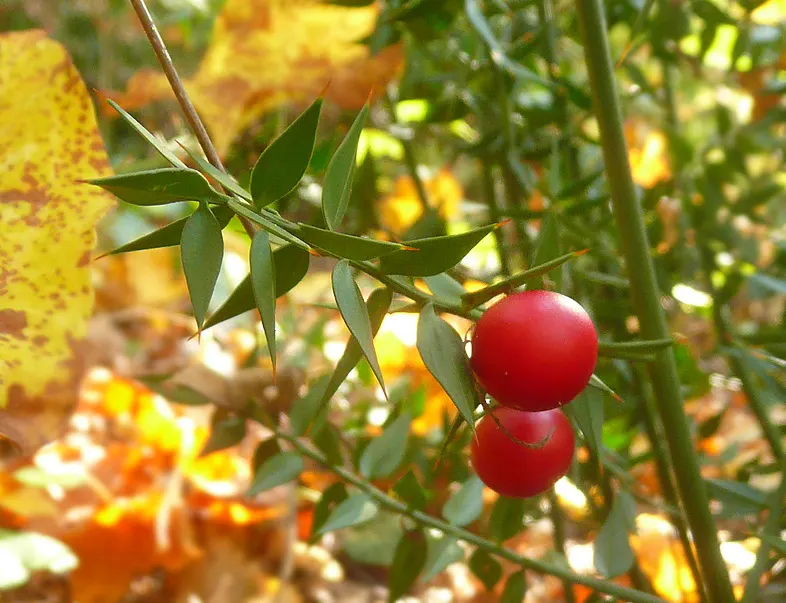
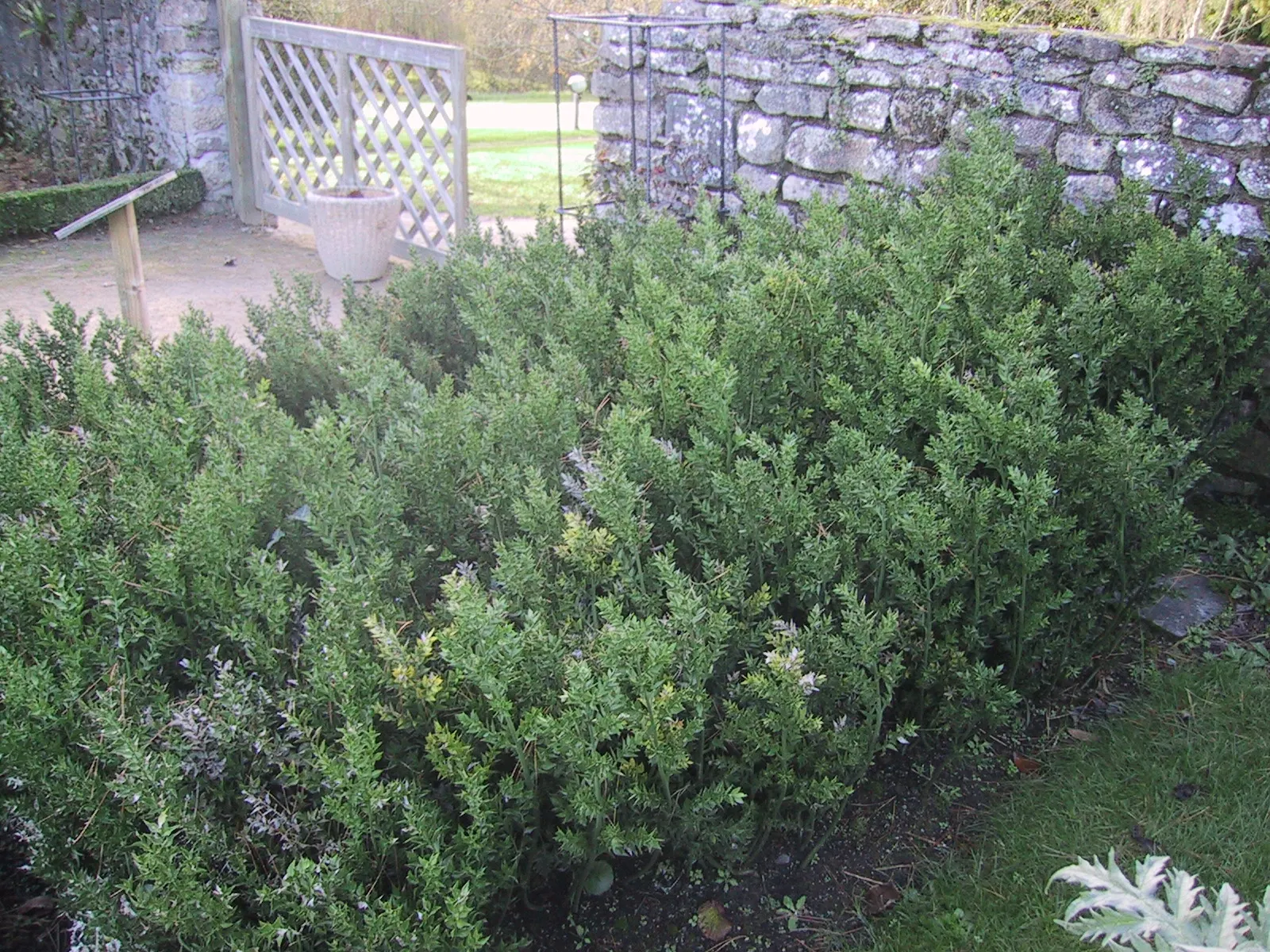
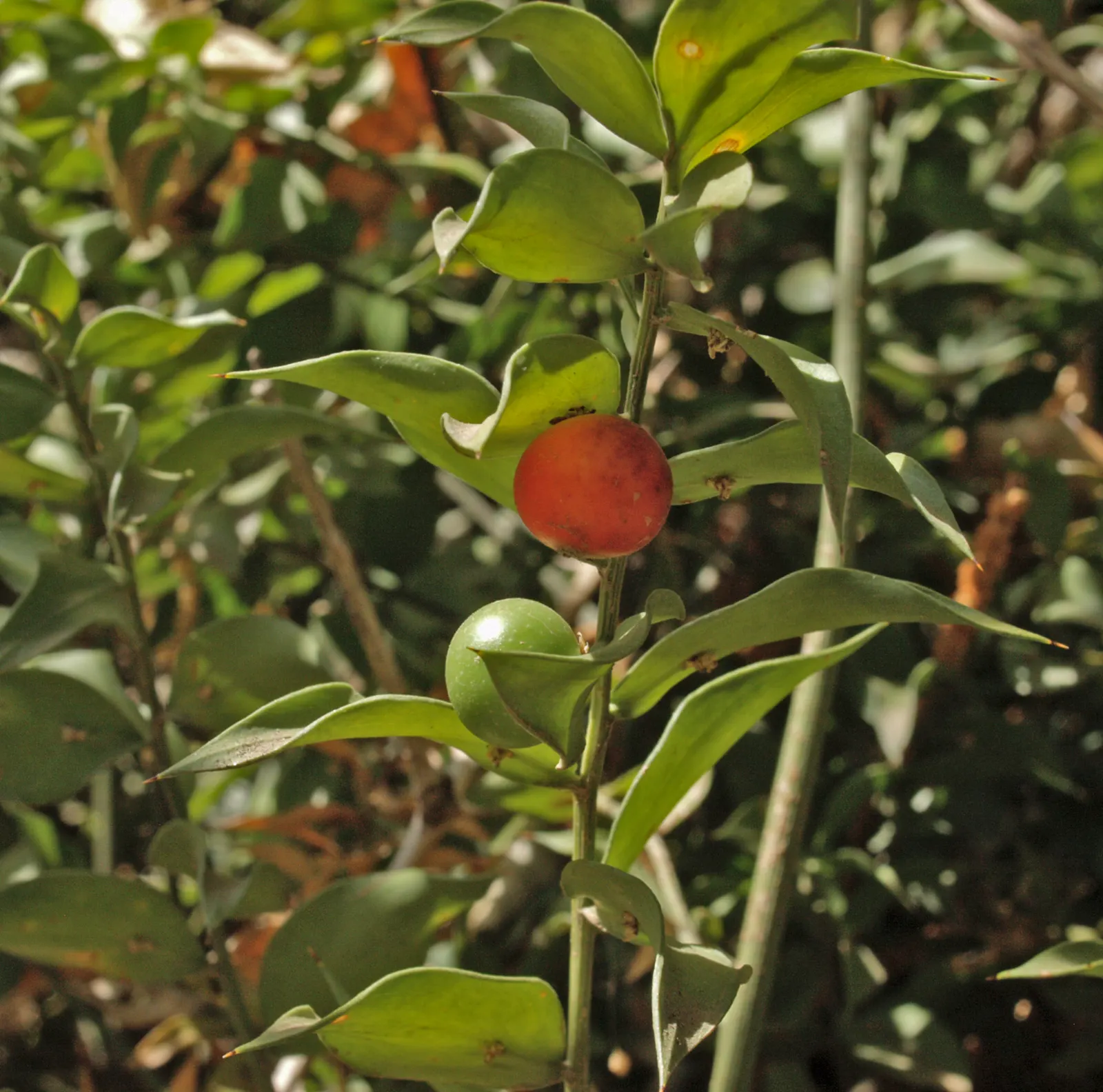
Ruscus aculeatus, commonly known as Butcher's Broom, is a tough evergreen shrub standing about 2-3 feet tall with a similar spread. Adapted to partial/full shade, it sports rich green, spine-tipped leaf-like structures (cladodes) with tiny flowers centered in winter. Red berries emerge in fall. Drought-resistant, this plant's dense growth habit makes it excellent for low-maintenance groundcover or understory plantings in hardiness zones 7-9.

Sun Deep Shade, ShadeWater LowZones 7–10Type Ground cover
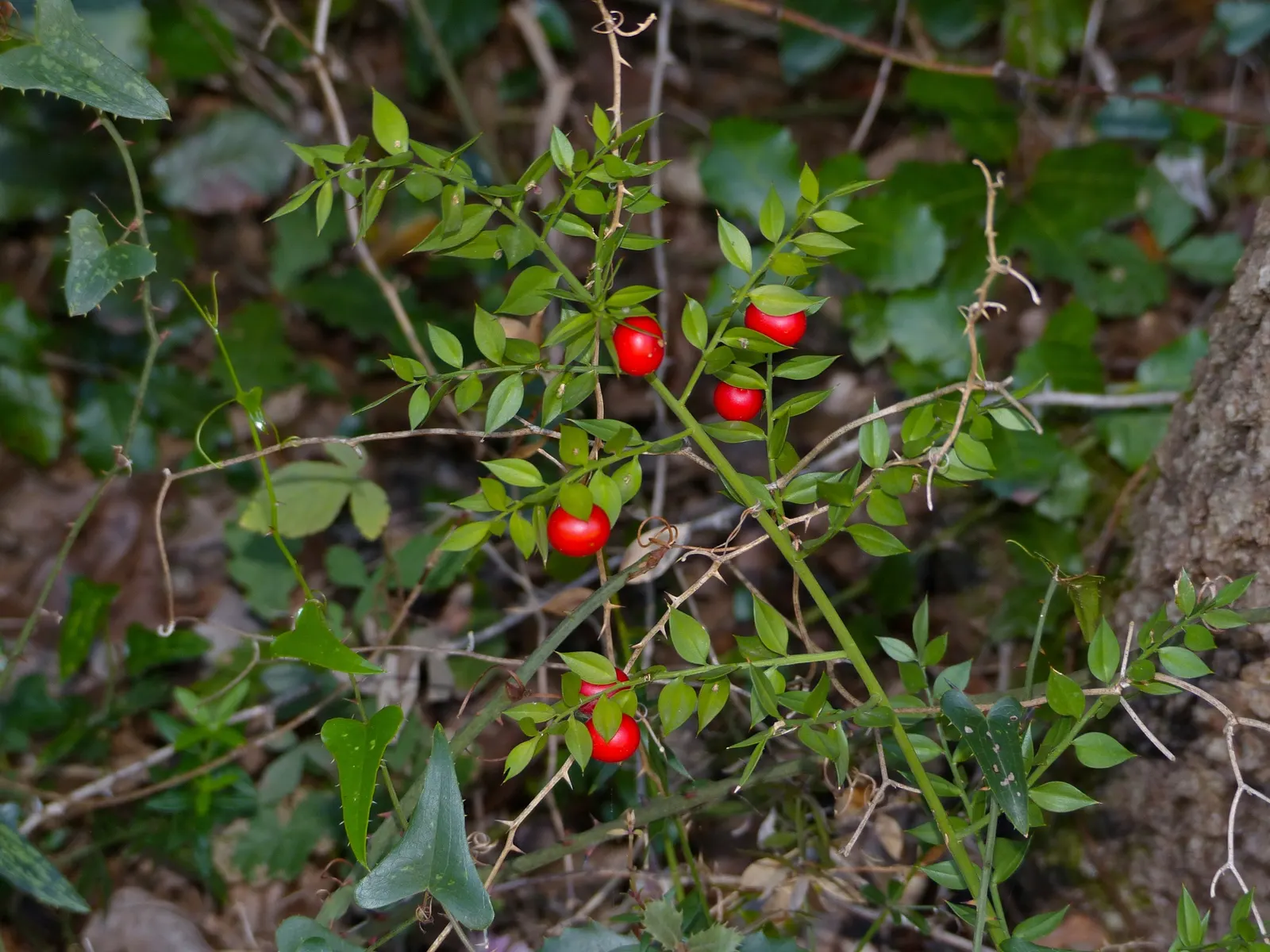
Butcher's Broom (Ruscus Aculeatus) — this shrub is highly adaptable; providing a bold contrast against the dark foliage and a source of food for, image 64

Culture

Sun
Deep Shade, Shade
Water
Low
USDA zones
7–10

Shape & size

Classification

Type
Ground cover
Family
Liliaceae

See full data, regional cultivation notes, and design tools. Build a client presentation around this plant.

Start your 14-day trial

Photos (98)

Butcher's Broom (Ruscus Aculeatus) — Butcher's Broom offers an attractive; tolerating a range of soil conditions from sandy to clay and preferring, image 68
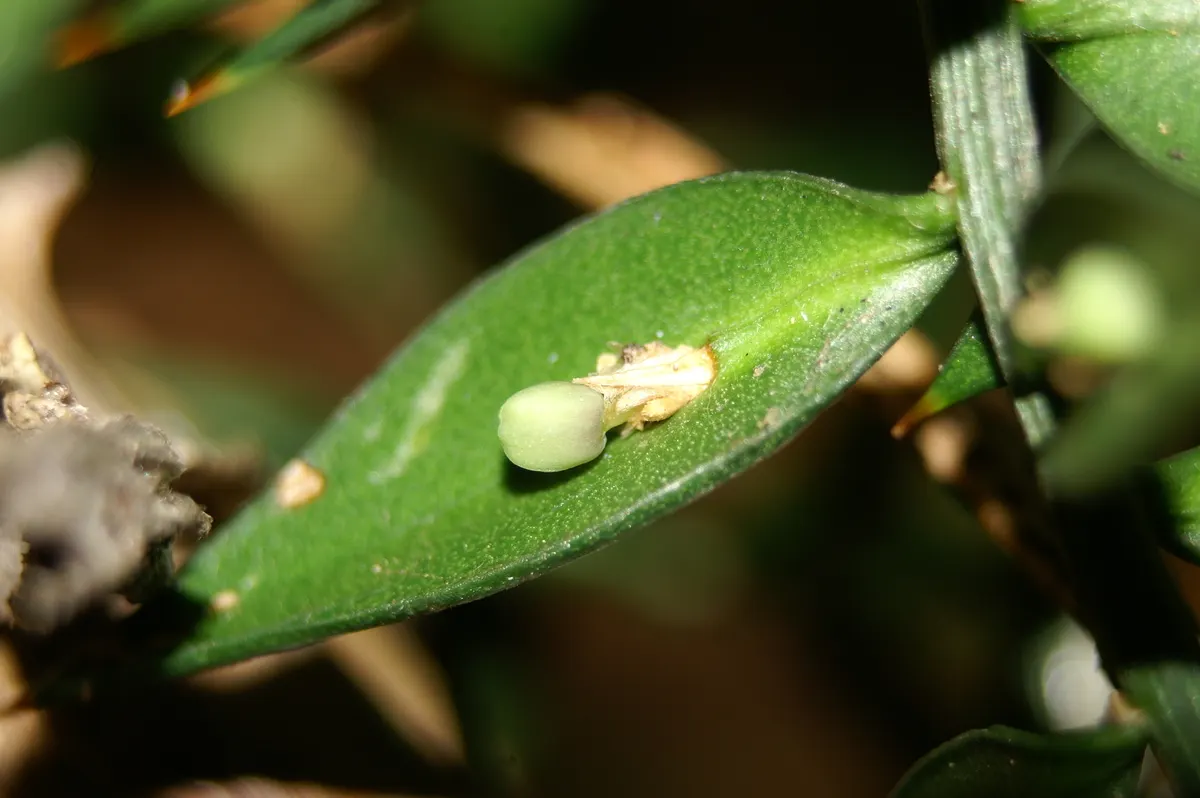
Butcher's Broom (Ruscus Aculeatus) — white flowers in the garden; characterized by its dark green
Butcher's Broom (Ruscus Aculeatus) — Red berries emerge in fall; upright stems that grow to a mature height of about 2.5 to 3 feet and a spread of, image 77
Butcher's Broom (Ruscus Aculeatus) — Adapted to partial/full shade
Butcher's Broom (Ruscus Aculeatus) — commonly known as Butcher's Broom; spine-tipped leaf-like structures (cladodes) with tiny flowers centered in, image 73
Butcher's Broom (Ruscus Aculeatus) — tolerating a range of soil conditions from sandy to clay and preferring partial to full shade; butcher's Broom offers an
Butcher's Broom (Ruscus Aculeatus) — commonly known as Butcher's Broom; spine-tipped leaf-like structures (cladodes) with tiny flowers centered in, image 49
Butcher's Broom (Ruscus Aculeatus) — Butcher's Broom is also drought-resistant once established; adapted to partial/full shade, image 66
Butcher's Broom (Ruscus Aculeatus) — Red berries emerge in fall
Butcher's Broom (Ruscus Aculeatus) — Red berries emerge in fall; upright stems that grow to a mature height of about 2.5 to 3 feet and a spread of, image 53
Butcher's Broom (Ruscus Aculeatus) — ground cover with white blooms; so both male and female plants are needed for fruit production, image 71
Butcher's Broom (Ruscus Aculeatus) — with only the female bearing the berries.<br><br>Hardy in USDA zones 7 to 9; this tough plant has a, image 63
Butcher's Broom (Ruscus Aculeatus) — white flowers in the garden
Butcher's Broom (Ruscus Aculeatus) — Adapted to partial/full shade; butcher's Broom is also drought-resistant once established, image 51
Butcher's Broom (Ruscus Aculeatus) — Adapted to partial/full shade; butcher's Broom is also drought-resistant once established
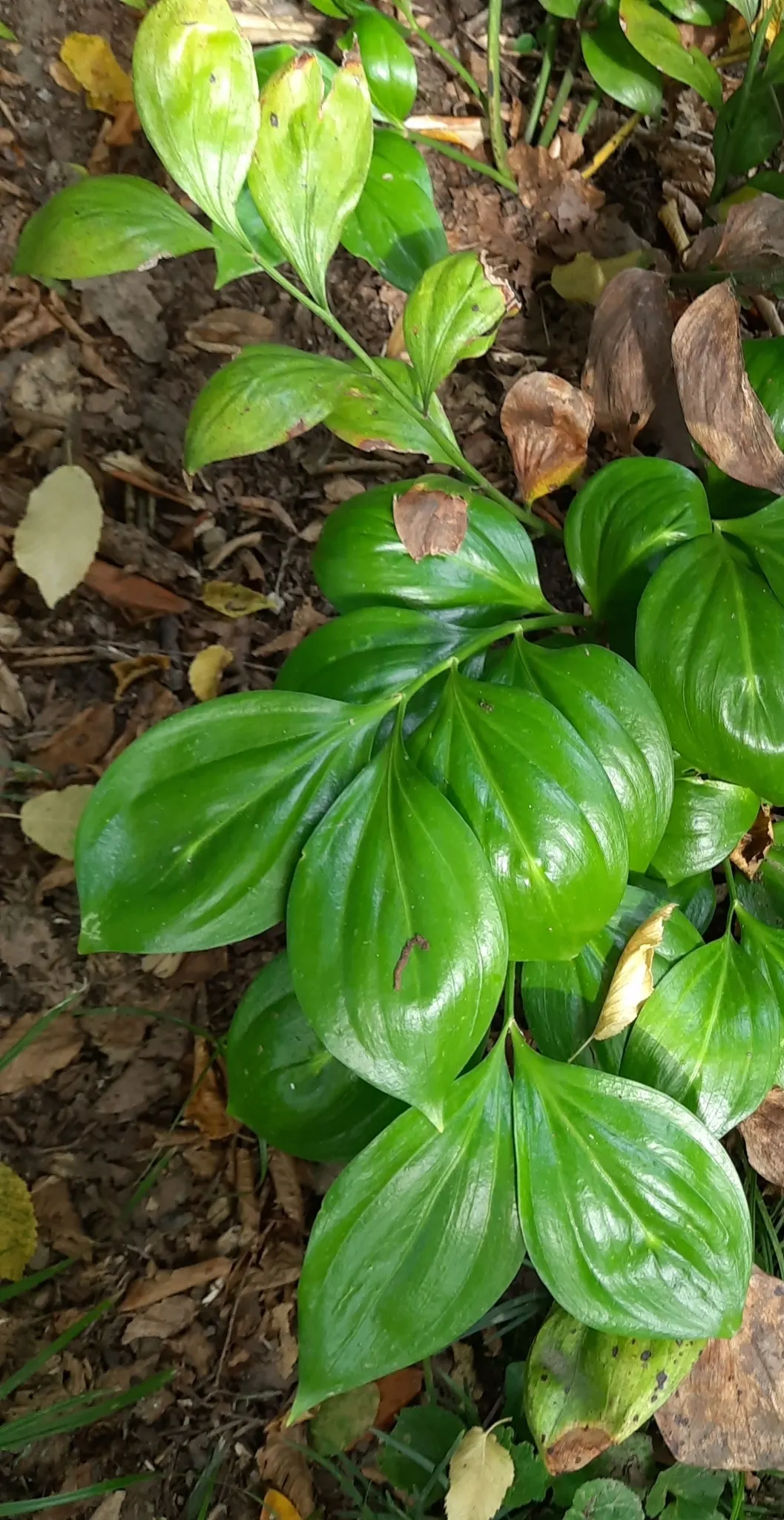
Butcher's Broom (Ruscus Aculeatus) — ground cover with white blooms
Butcher's Broom (Ruscus Aculeatus) — This tough plant has a distinctive appearance; with only the female bearing the berries.<br><br>Hardy in USDA, image 54
Butcher's Broom (Ruscus Aculeatus) — ground cover for deep shade or shade; ensure to plant both male and female specimens if berry production is desired
Butcher's Broom (Ruscus Aculeatus) — Butcher's Broom offers an attractive; tolerating a range of soil conditions from sandy to clay and preferring partial to
Butcher's Broom (Ruscus Aculeatus) — commonly known as Butcher's Broom; spine-tipped leaf-like structures (cladodes) with tiny flowers centered in winter
Butcher's Broom (Ruscus Aculeatus) — making it an excellent choice for low-maintenance gardens; pointed stems (cladodes) which perform, image 67
Butcher's Broom (Ruscus Aculeatus) — making it an excellent choice for low-maintenance gardens; pointed stems (cladodes) which perform photosynthesis
Butcher's Broom (Ruscus Aculeatus) — white flowers in the garden; characterized by its dark green, image 70
Butcher's Broom (Ruscus Aculeatus) — with only the female bearing the berries.<br><br>Hardy in USDA zones 7 to 9; this tough plant has a distinctive appearance
Photographs by 12 contributors

Related plants