Skip to content

Flame Vine

Pyrostegia Venusta

Design with this plant

Overview

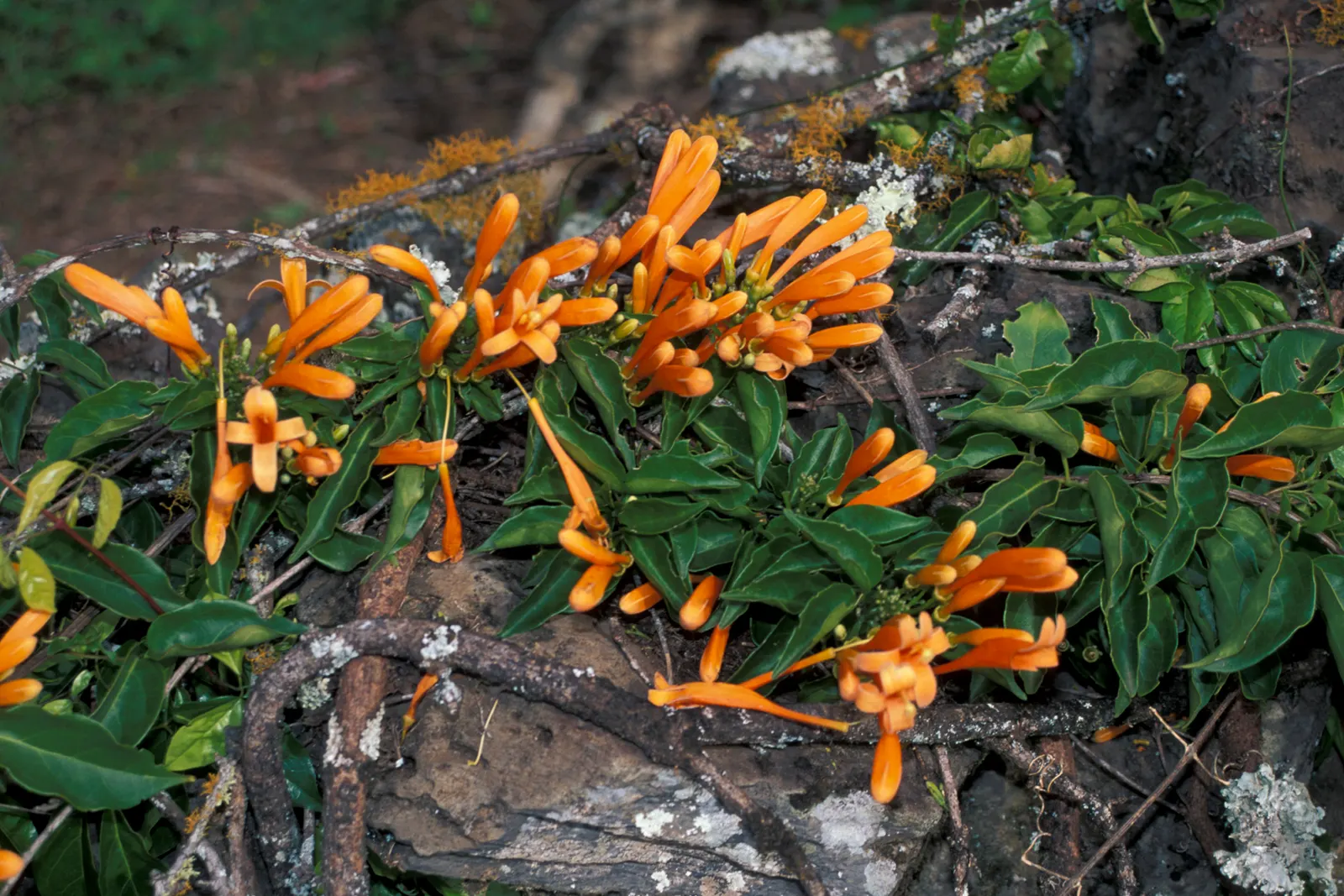
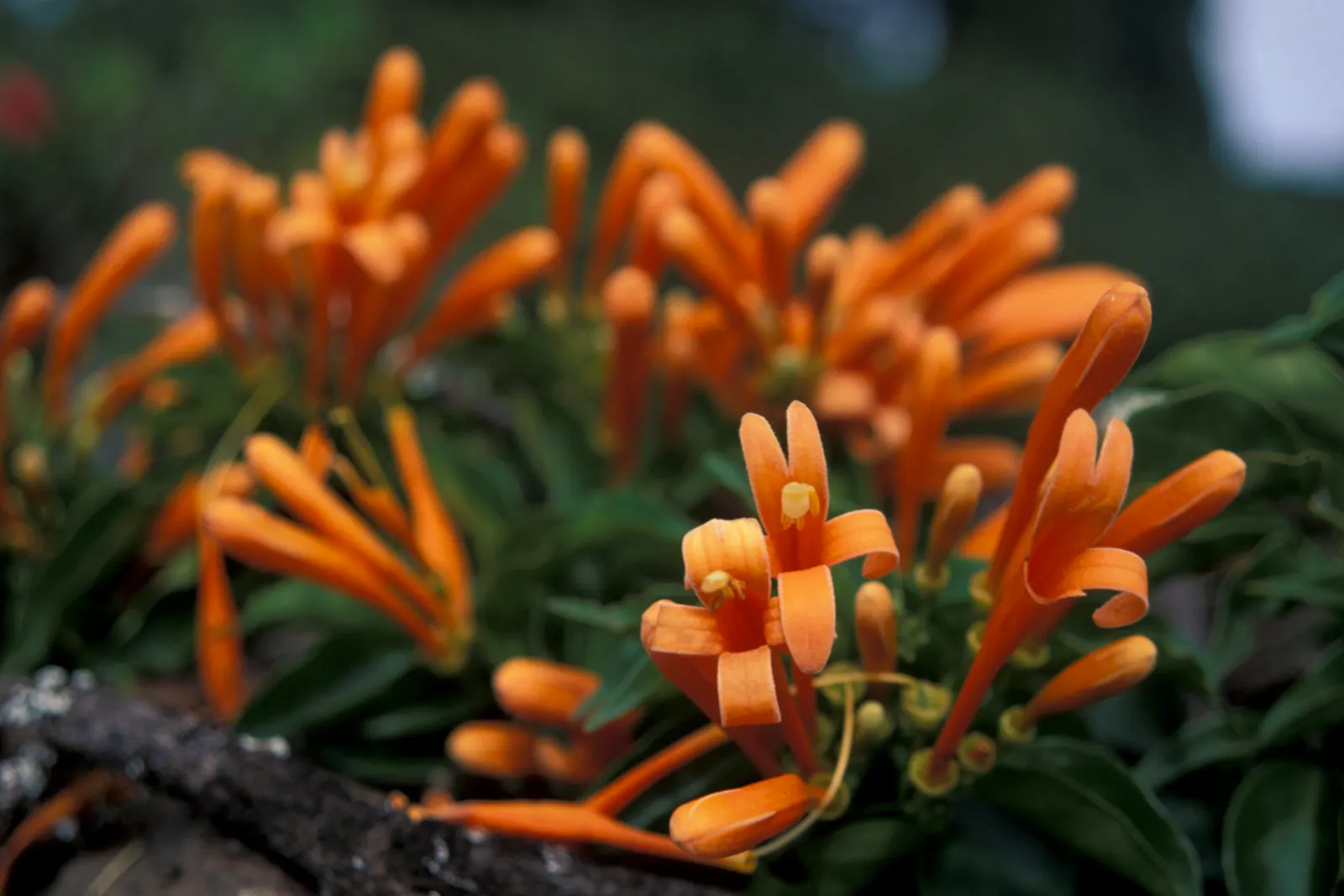
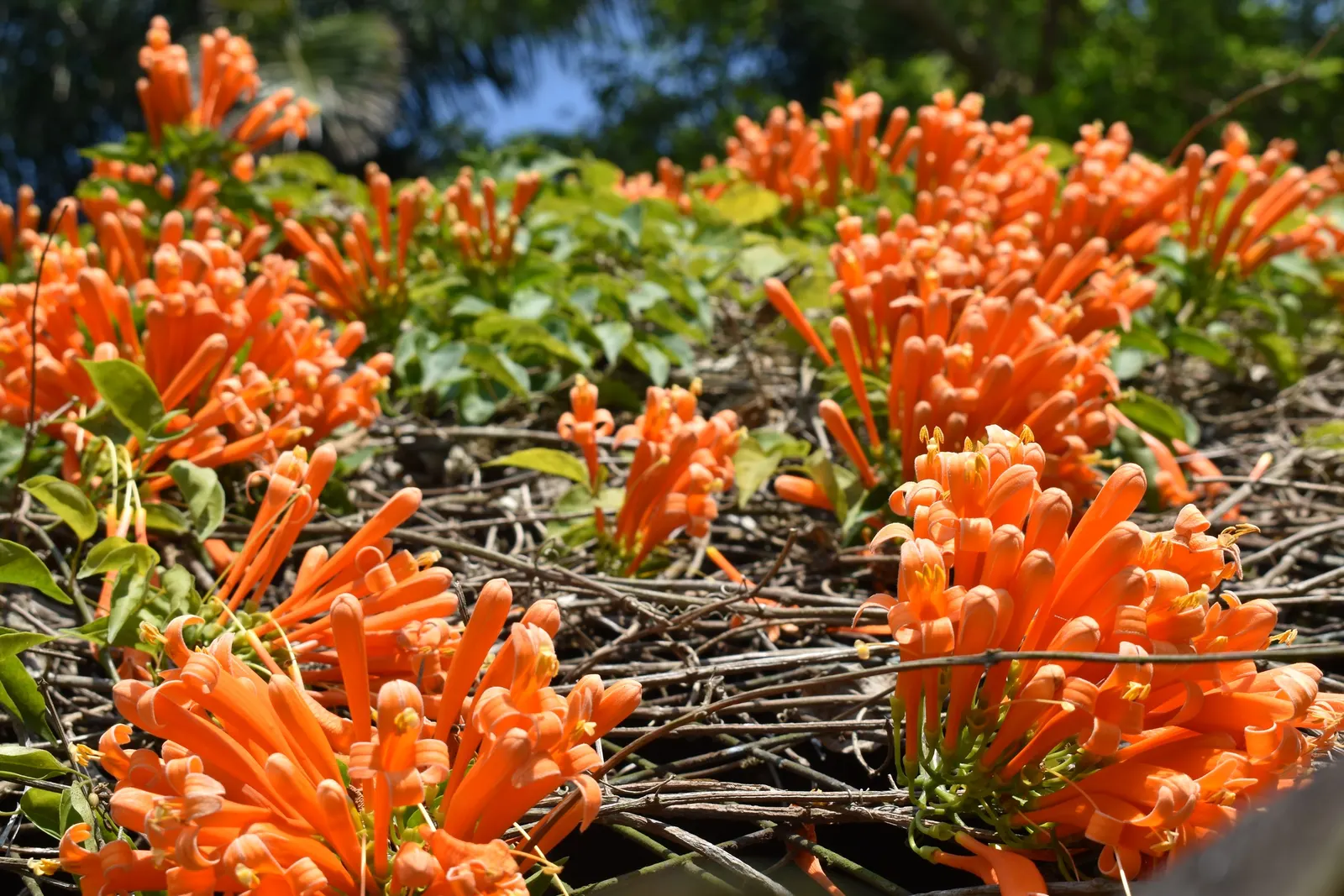
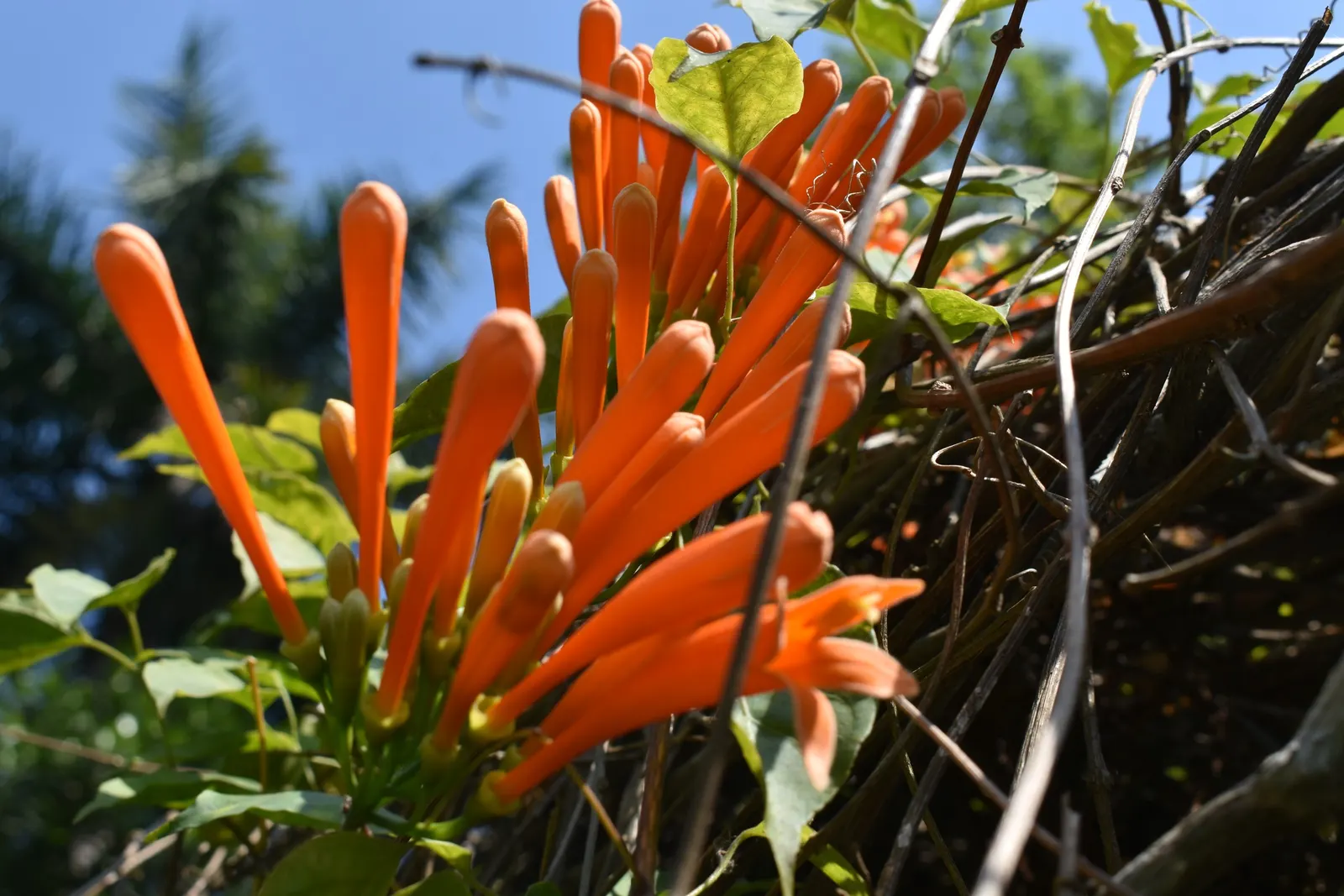
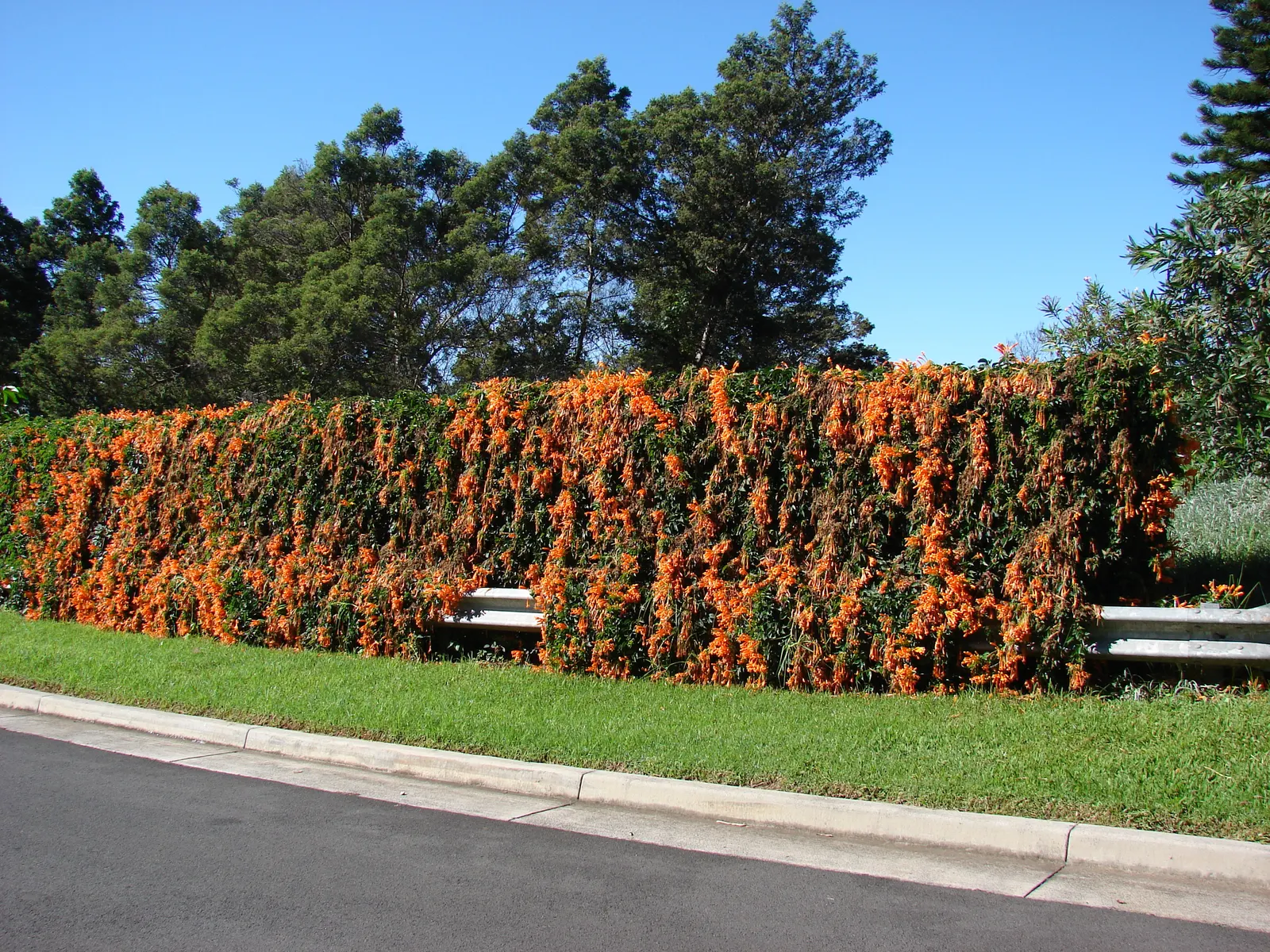
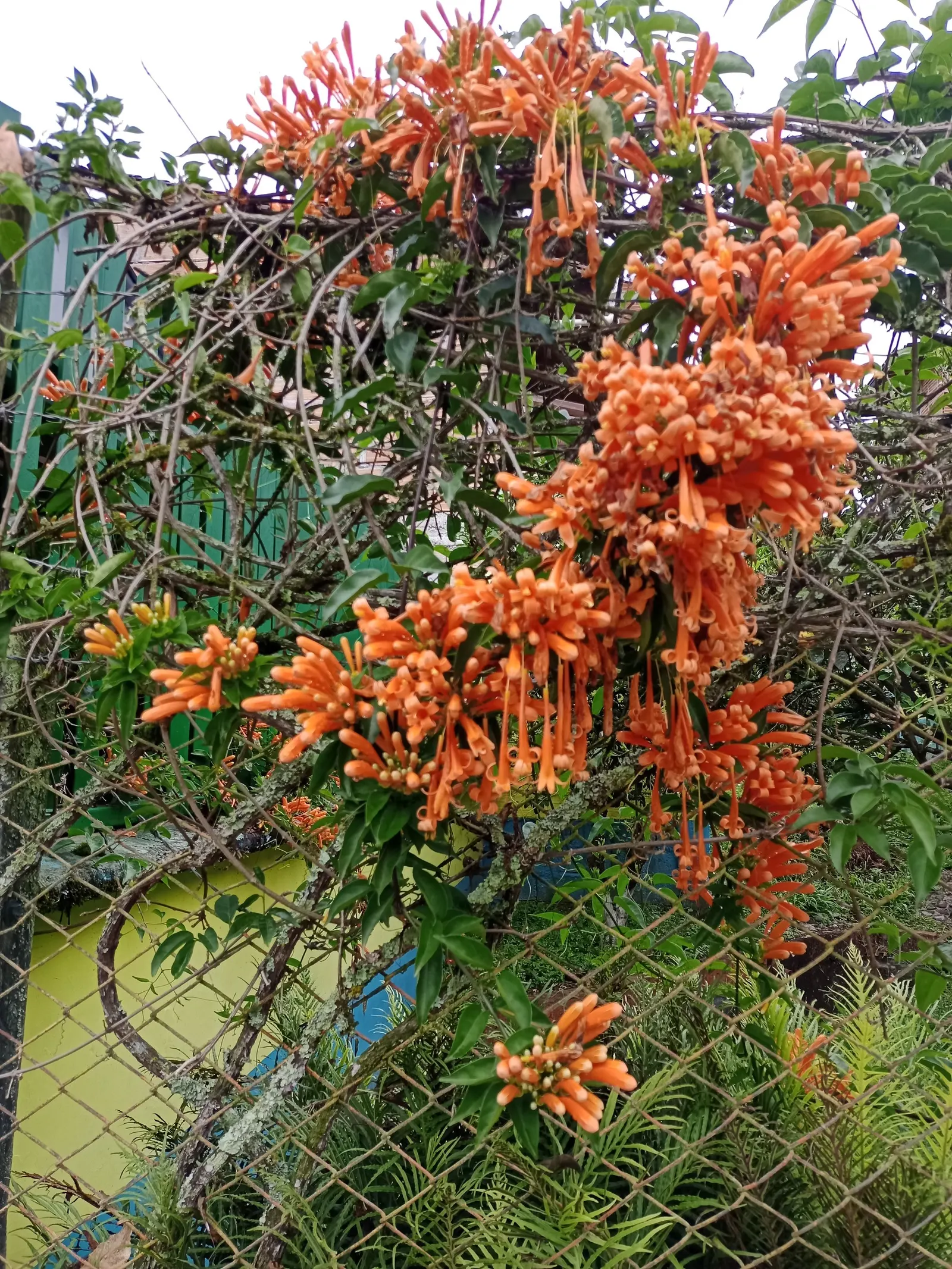
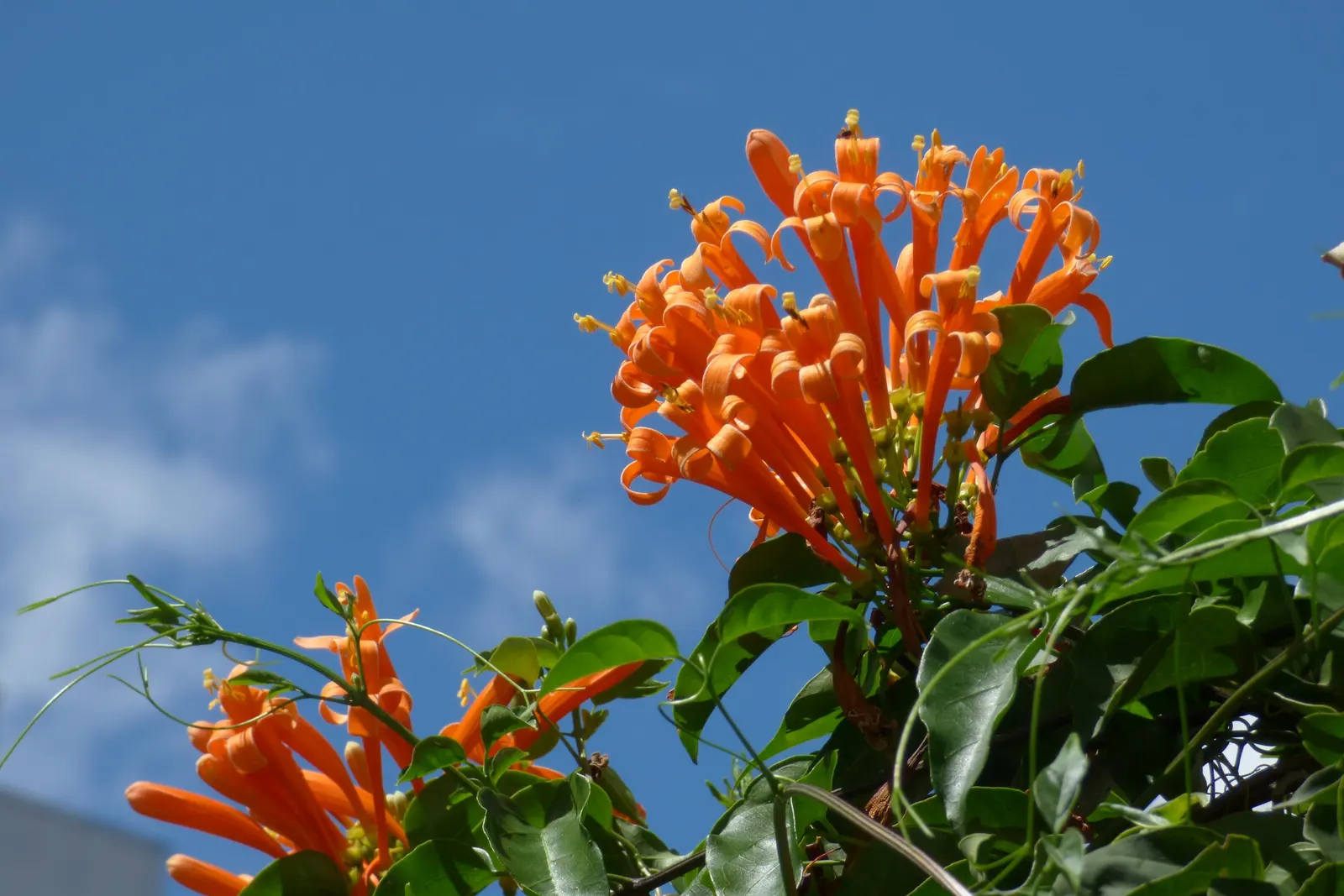
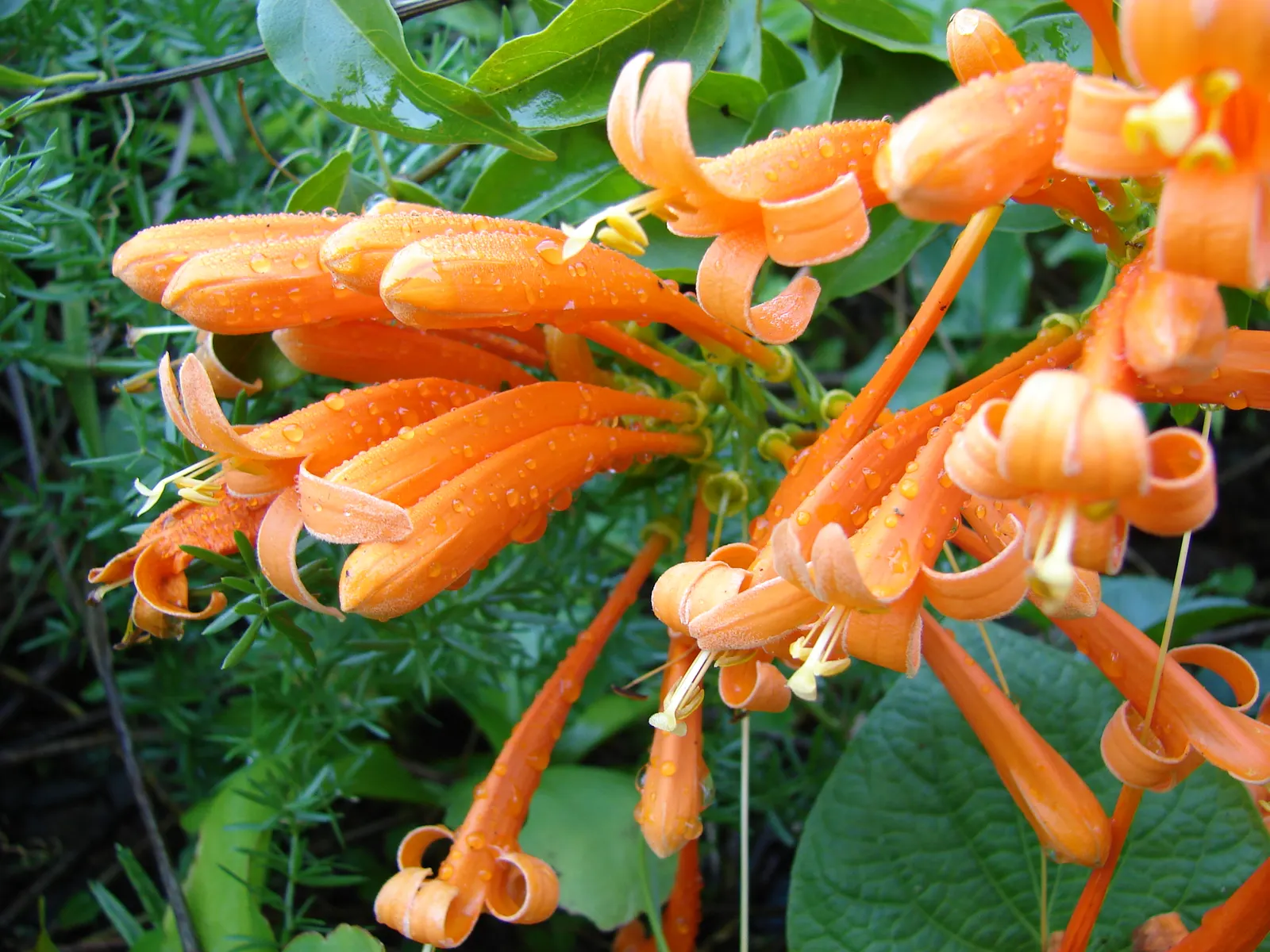
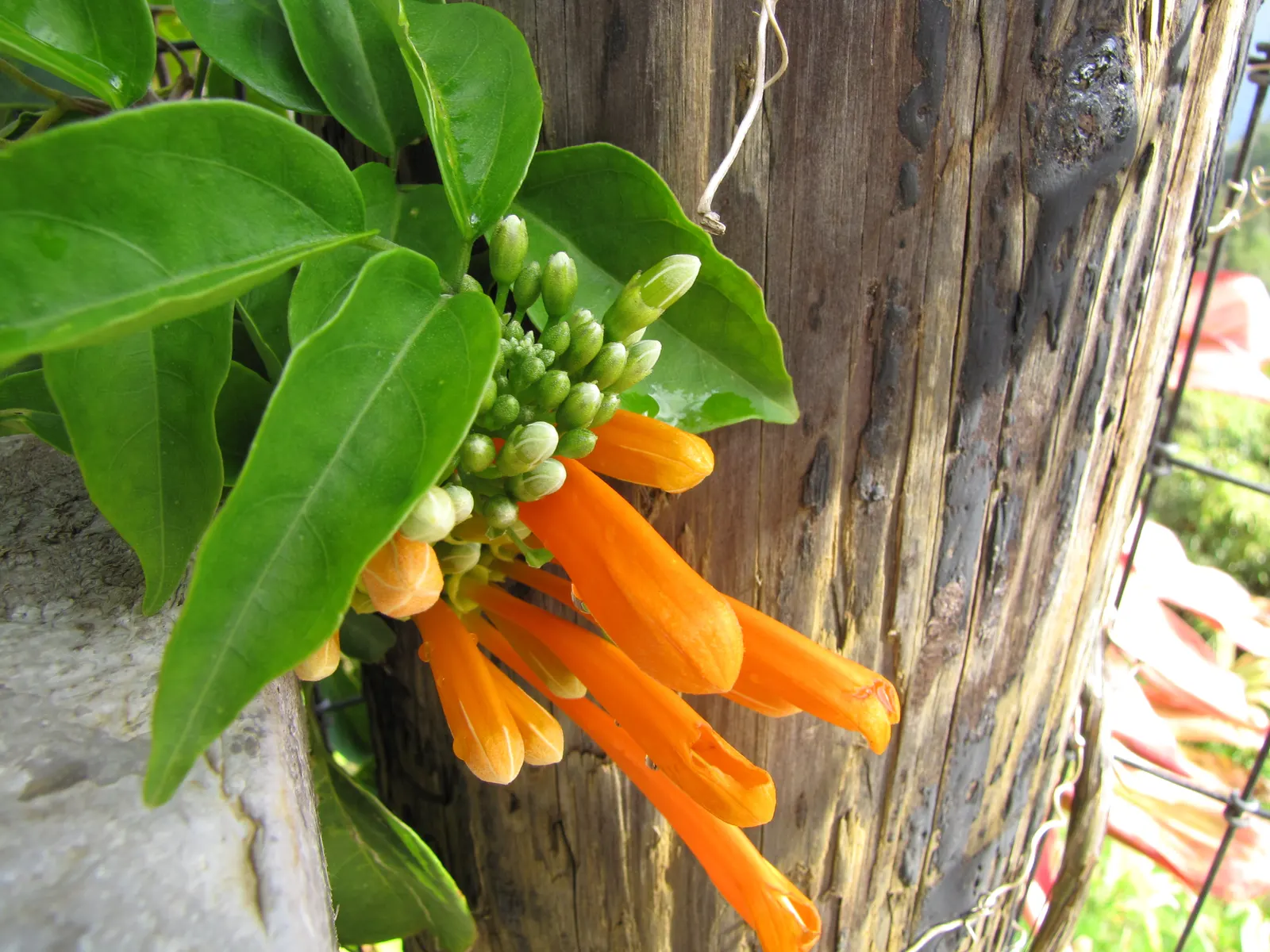
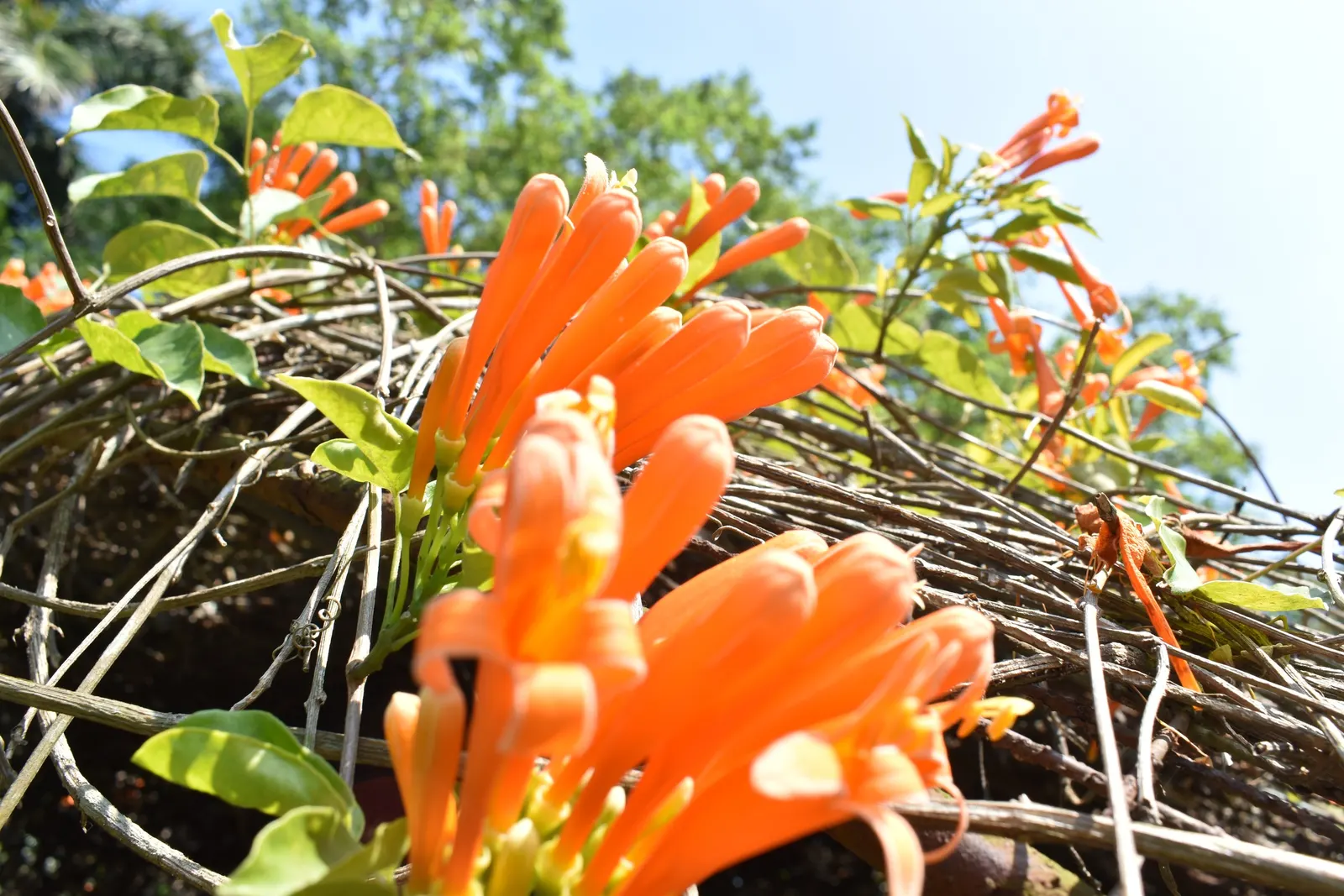
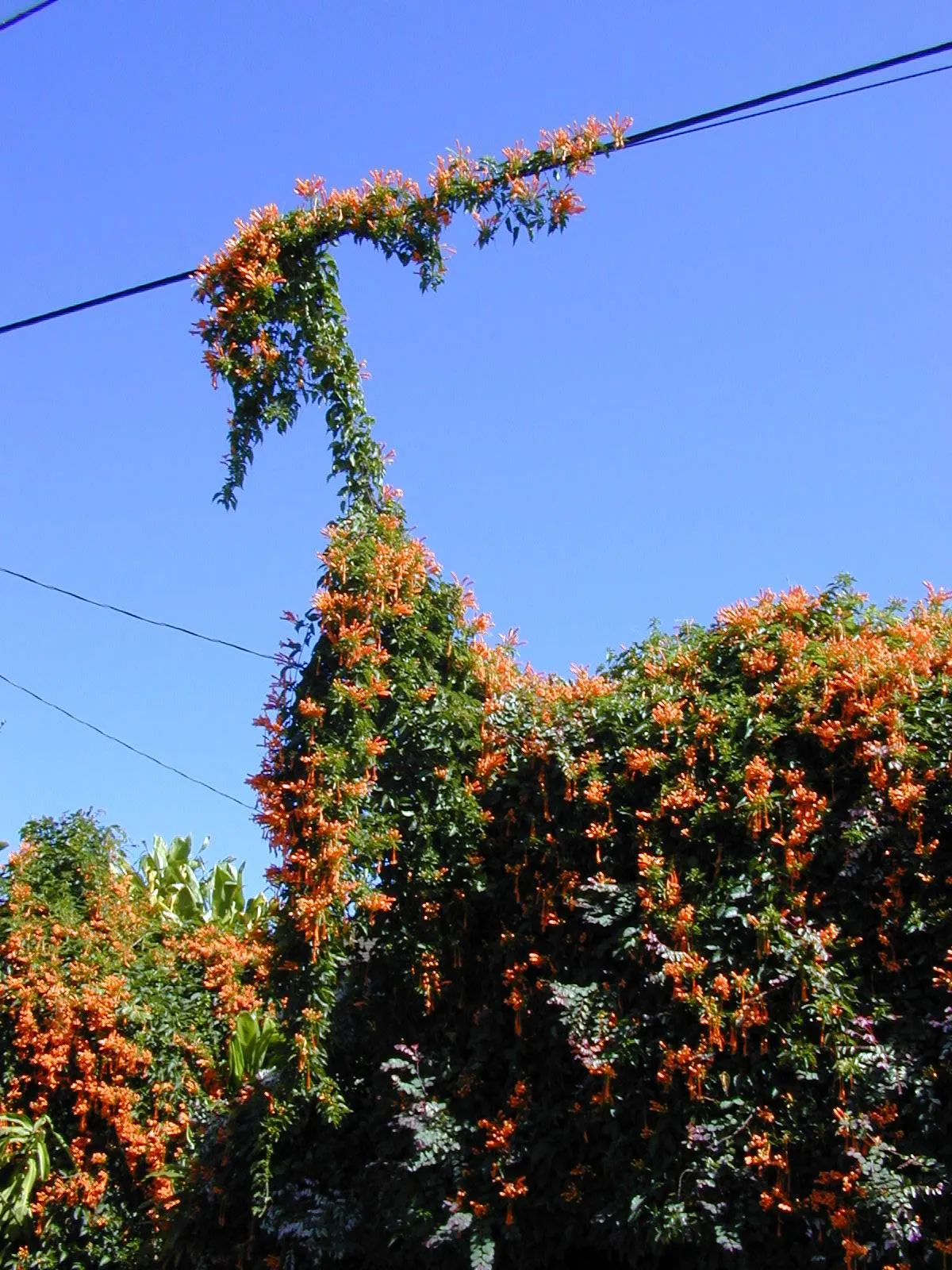
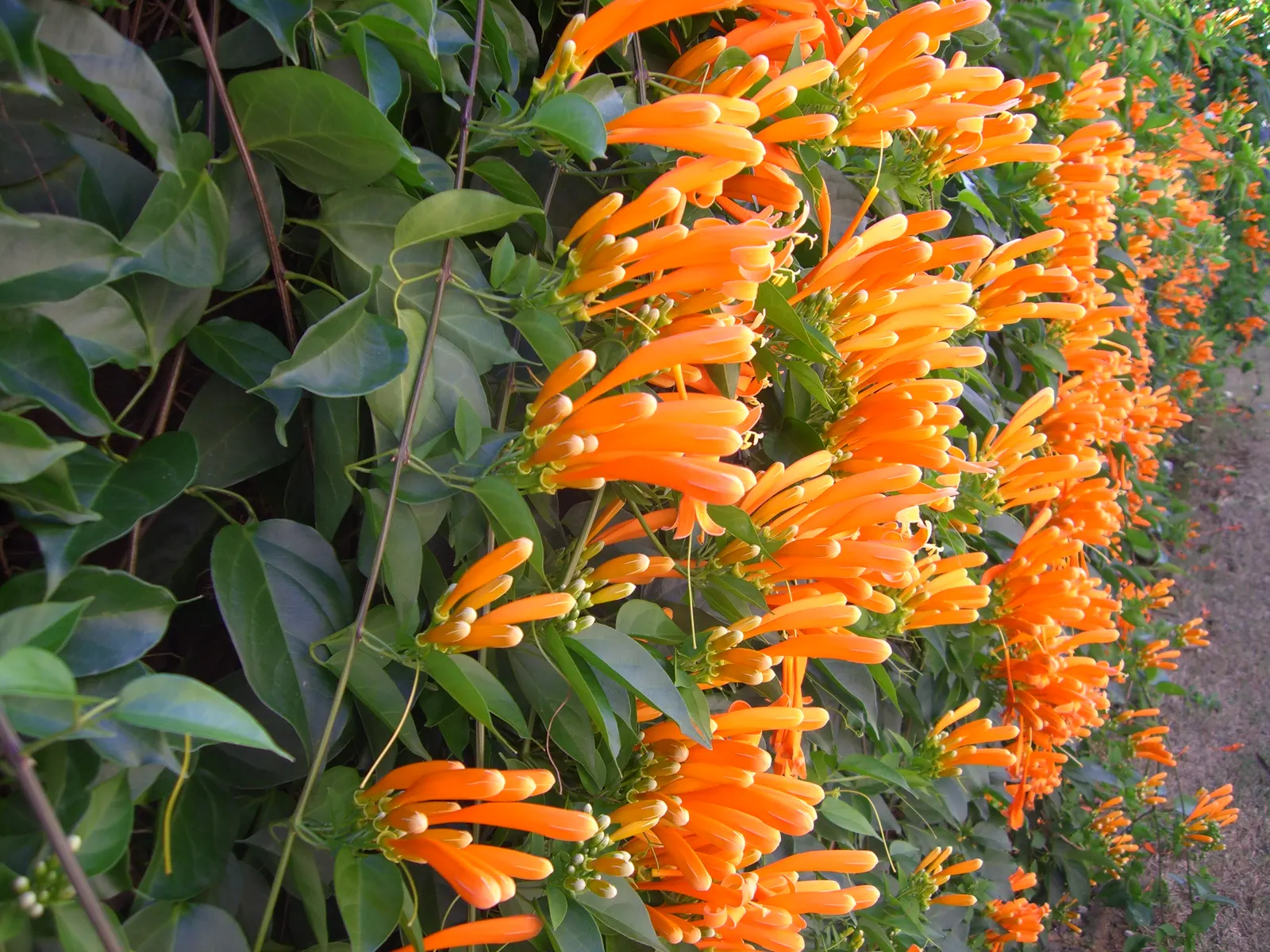
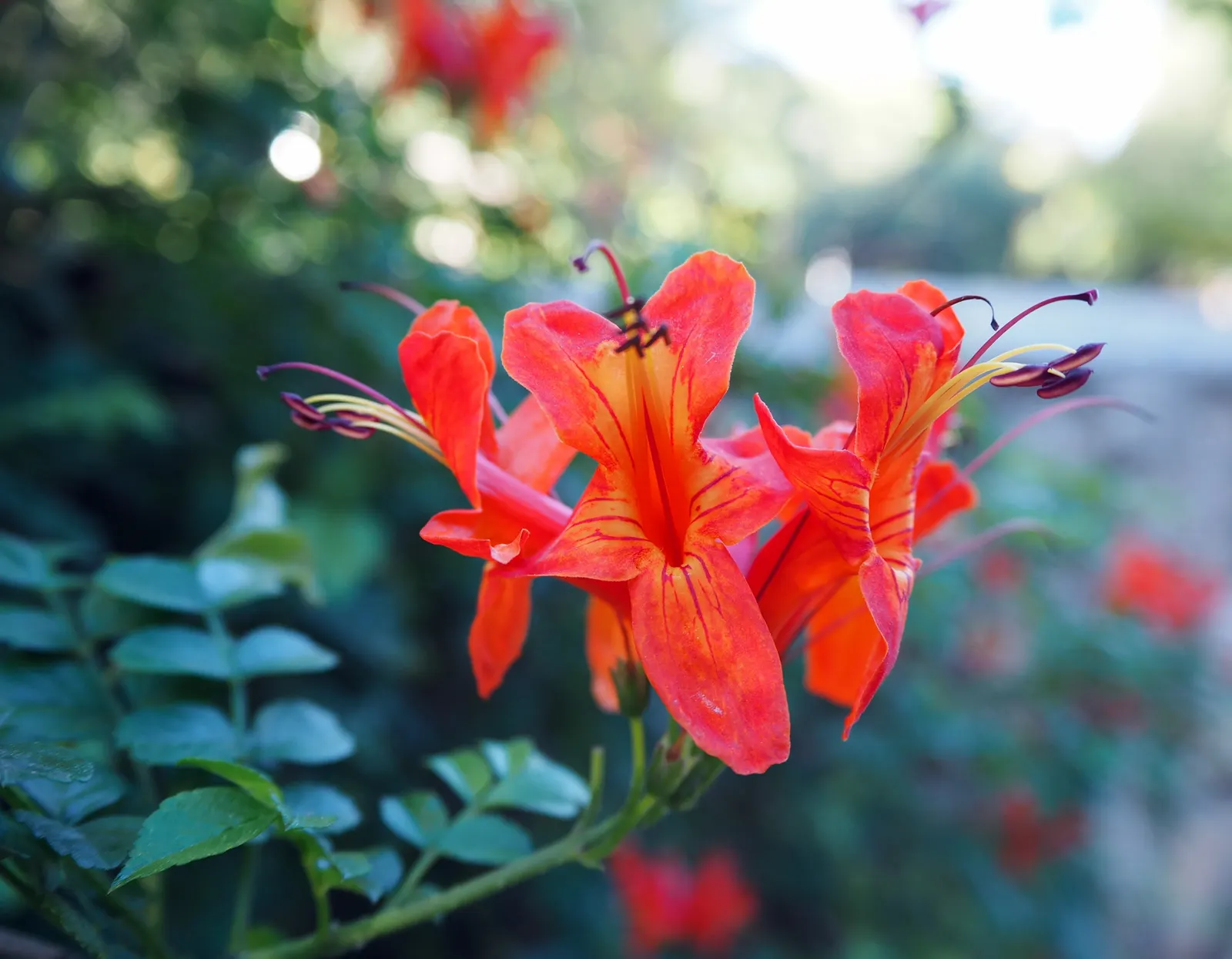
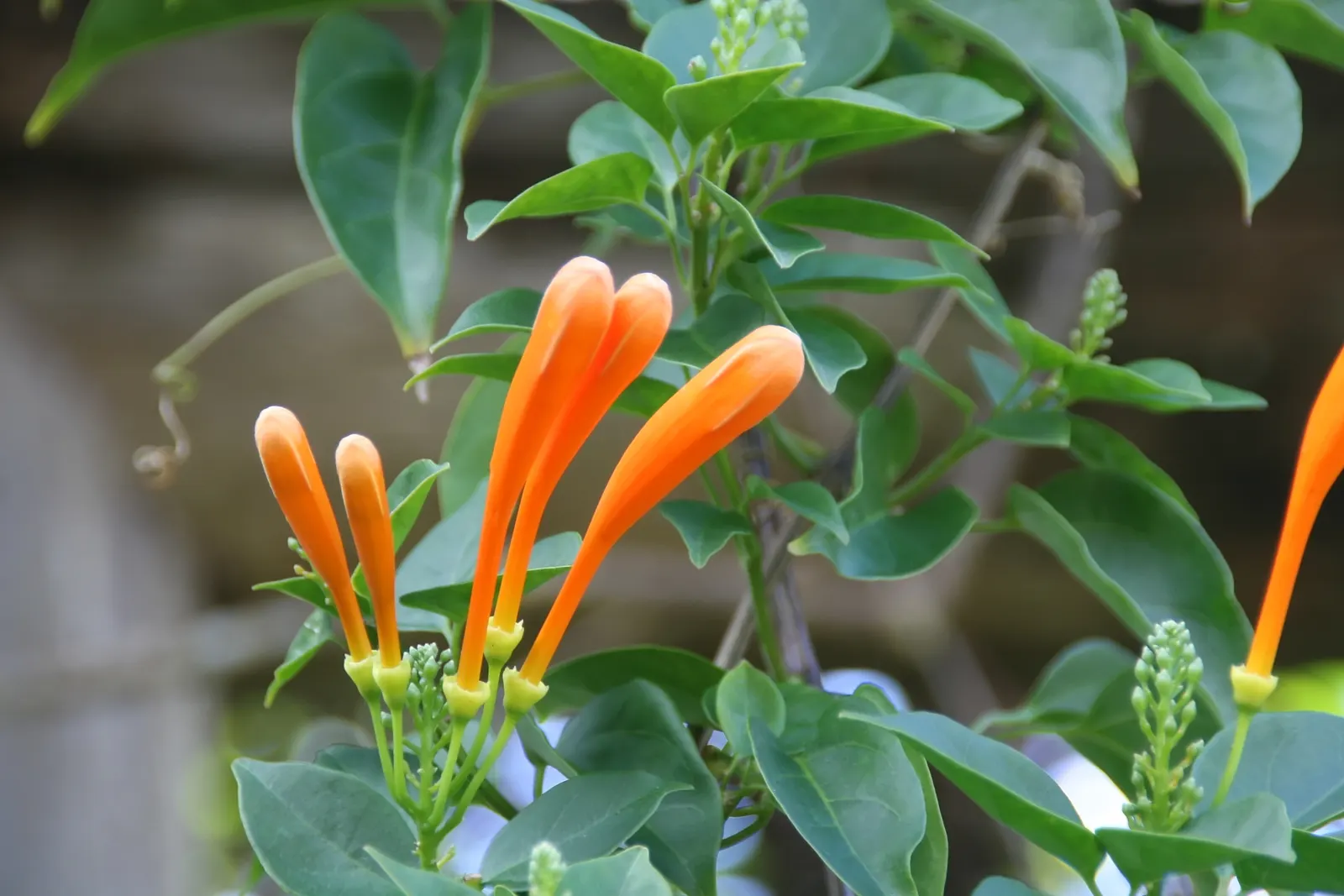
The Flame Vine, Pyrostegia venusta, is a vigorous evergreen climber known for its profusion of brilliant orange tubular flowers that cascade in stunning winter displays. Thriving in USDA zones 9-11, it reaches up to 20ft in height and spreads 6-10ft. Full sun exposure encourages optimal blooming. This vine prefers well-drained soil and moderate watering. Its fast-growing nature makes it ideal for covering trellises, fences, and walls, adding vibrant warmth to any landscape.
Sun Full, HalfWater Extra in Summer, MediumZones 10–10Climate Subtropical
Flame Vine (Pyrostegia Venusta) — though it is drought-tolerant once established

Culture

Sun
Full, Half
Water
Extra in Summer, Medium
USDA zones
10–10

Shape & size

Classification

Family
Bignoniaceae
Climate
Subtropical

See full data, regional cultivation notes, full-resolution photos, and design tools. Build a client presentation around this plant.

Start your 14-day trial

Photos (171)

Flame Vine (Pyrostegia Venusta) — Full sun exposure encourages optimal blooming; such as pergolas or fences
Flame Vine (Pyrostegia Venusta) — vibrant climber that provides a burst of brilliant color to any landscape design; orange flowers in the garden
Flame Vine (Pyrostegia Venusta) — The Flame Vine (Pyrostegia venusta) is a stunning; it prefers well-drained soil with regular watering
Flame Vine (Pyrostegia Venusta) — vine with orange blooms
Flame Vine (Pyrostegia Venusta) — vine for full or half
Flame Vine (Pyrostegia Venusta) — Thriving in USDA zones 9-11, it reaches up to 20ft in height and spreads 6-10ft; its fast-growing nature makes it ideal for
Flame Vine (Pyrostegia Venusta) — This vine prefers well-drained soil and moderate watering; pruning after the blooming season can control growth and promote
Flame Vine (Pyrostegia Venusta) — though it is drought-tolerant once established; as it's a favorite of hummingbirds and butterflies.<br><br>In summary
Flame Vine (Pyrostegia Venusta) — such as pergolas or fences; full sun exposure encourages optimal blooming
Flame Vine (Pyrostegia Venusta) — as it can reach lengths of up to 40 feet when mature; creating a warm tropical effect even in temperate gardens.<br><br>For
Flame Vine (Pyrostegia Venusta) — Flame Vine thrives in USDA hardiness zones 9b through 11.<br><br>Aside from its aesthetic appeal; particularly during dry
Flame Vine (Pyrostegia Venusta) — the Flame Vine is relatively low-maintenance; vine with orange blooms
Flame Vine (Pyrostegia Venusta) — It prefers well-drained soil with regular watering; the Flame Vine (Pyrostegia venusta) is a stunning
Flame Vine (Pyrostegia Venusta) — particularly during dry periods; flame Vine thrives in USDA hardiness zones 9b through 11.<br><br>Aside from its aesthetic
Flame Vine (Pyrostegia Venusta) — the Flame Vine is unmatched; this plant is an excellent option for gardeners looking to attract pollinators
Flame Vine (Pyrostegia Venusta) — creating a warm tropical effect even in temperate gardens.<br><br>For clients seeking a show-stopping display; as it can
Flame Vine (Pyrostegia Venusta) — especially from late fall to early spring; adding vibrant warmth to any landscape
Flame Vine (Pyrostegia Venusta) — vine for full or half; all with minimal care requirements once settled into its environment
Flame Vine (Pyrostegia Venusta) — vine with orange blooms; the Flame Vine is relatively low-maintenance
Flame Vine (Pyrostegia Venusta) — Full sun exposure encourages optimal blooming; such as pergolas or fences, image 50
Flame Vine (Pyrostegia Venusta) — Thriving in USDA zones 9-11, it reaches up to 20ft in height and spreads 6-10ft; its fast-growing nature makes it, image 49
Flame Vine (Pyrostegia Venusta) — This vine prefers well-drained soil and moderate watering; pruning after the blooming season can control growth, image 51
Flame Vine (Pyrostegia Venusta) — orange flowers in the garden; vibrant climber that provides a burst of brilliant color to any landscape design
Flame Vine (Pyrostegia Venusta) — as it's a favorite of hummingbirds and butterflies.<br><br>In summary; though it is drought-tolerant once established

Related plants